Life
- Microbes
Recycling the dead
When things die, nature breaks them down through a process we know as rot. Without it, none of us would be here. Now, scientists are trying to better understand it so that they can use rot — preserving its role in feeding all living things.
- Brain
Eating disorders: The brain’s foul trickery
Experts on eating disorders are probing why sometimes deadly chemical changes can distort how much the brain says we need to eat.
- Brain
Your sleeping brain is listening
Most people think that sleep is when the brain turns off to rest. But a new study finds that even as people get their zzz’s, their brains remain alert. At least they stay alert enough to sort information as though they were awake.
- Animals
Sharks’ super sniffers at risk
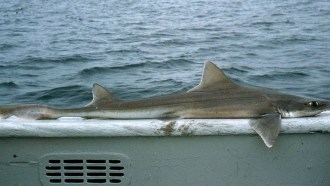
Rising ocean acidity could rob sharks of their ability to sniff out dinner, marine biologists find.
- Fossils
Biggest dino ever?
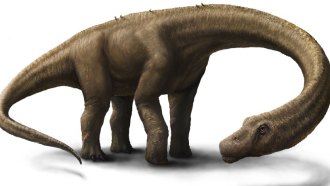
This plant-eater would have towered over even a T. rex. A truly huge brute, Dreadnoughtus means ‘fear nothing.’
- Health & Medicine
You can be too thin
Eating disorders aren’t about vanity. They are mental illnesses that can prove deadly.
- Health & Medicine
The media’s dangerous influence on body image
A study found how powerful TV and ad messages can be in distorting the attitudes about body image among young girls in Fiji.
- Animals
Chef puts eco-bullies on the menu
Some immigrant species can become a nuisance, eating up or displacing the natives. Often people find little incentive to catch and remove the newcomers — unless they find them too yummy to pass up.
- Animals
A fish out of water — walks and morphs
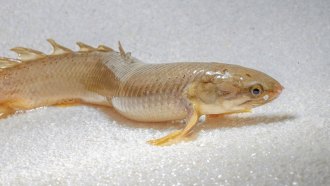
When this modern ‘walking’ fish was raised on land, its body changed. How it adapted resembles some prehistoric fish. These alterations hint at evolutionary changes that may have made life on land possible.
- Brain
Mistakes: A key to learning
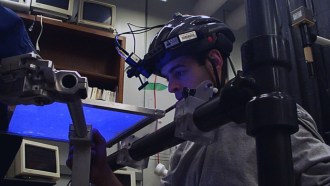
This man uses a robotic arm to move a cursor across a computer screen. The screen blocks his view of his hand and arm. This focuses his attention on any errors he makes as he tries to move a cursor to a target location.
- Tech
Plants ‘listen’ for danger
Scientists used lasers to show that plants can “hear” insect pests. Those leafy plants then mount a chemical attack in response to the bug’s chewing sounds — but not toward harmless noises such as a gentle breeze or a bug’s mating call.
- Brain
Learning rewires the brain
Brain cells actually change shape as we learn. It’s one way we cement new knowledge. And much of the action happens as we sleep.