Math
- Computing
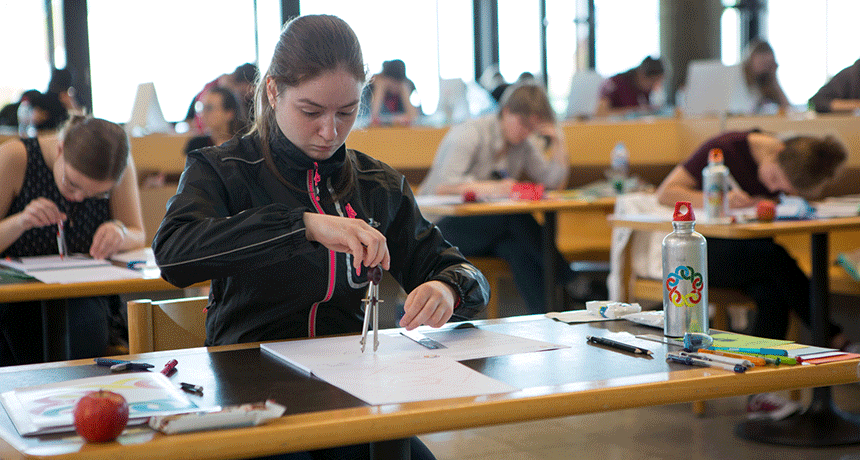
Math + teens + practice = a winning competition
Training for an Olympics of math helps students stretch their creativity and learn problem solving skills. If you like puzzles, you might want to check out these events.
- Math
Math isn’t just for boys
The United States won the International Mathematical Olympiad in 2015 and 2016. The big question: Why wasn’t there even one girl on either year’s team?
- Brain
Anxious about math? Your brain may tackle simple problems differently
A study found more variable brain activity in people who get nervous about math problems than those who do not.
- Math
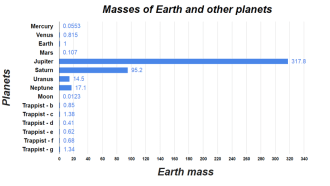
Analyze This: The masses of planets
Scientists discovered a solar system with planets that are similar in size and mass to Earth. Using data, we take a closer look at that similarity.
- Science & Society
Cool Jobs: Reaching out to E.T. is a numbers game
From figuring out if we’re alone in the universe, to writing messages to aliens, scientists use math in many ways in their search for extraterrestrial intelligence.
- Brain
High-school brain researcher takes home $250,000 prize
Three teens won big in this year’s Regeneron Science Talent Search. They studied brain injury, mathematical models and networks of connections within big data sets.
- Math
What happens when you look at crime by the numbers
Statistics can find crime hot spots or flag which police officers are more likely to shoot at crime scenes. Unfortunately, some data risk misleading the police.
- Health & Medicine
Math attitude influences math achievement
Bad feelings about math beget bad grades, a new study shows. The good news? Positive feelings are associated with good grades, too.
- Brain
Don’t let math stress you out
New research points to strategies for improving math performance in people who get stressed out by the numbers world.
- Math
Cool Jobs: Motion by the numbers
What do car crash testers, video game creators and scientists who study athletic performance have in common? All use geometry in their cool jobs.
- Math
Explainer: The basics of geometry
From points and lines to complex three-dimensional shapes, our world is made of shapes and spaces. The math used to understand most of these is known as geometry.
- Computing
Two numbers set a record — and not just for being book length
Twin primes are prime numbers that differ by just 2. The largest known twins have just been discovered — each 388,342 digits long!