Math
- Brain
Out-of-whack body clock causes more than sleepiness
When the body’s “clock” doesn’t match the cues its getting from outside, people can feel bad. Researchers are using math to explain this “circadian-time sickness.”
- Math
Math predicts weird materials; leads to 2016 physics Nobel
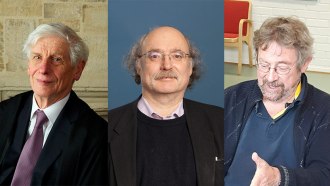
The 2016 Nobel Prize in physics will go to three researchers that have made discoveries about exotic states of matter.
- Computing
Self-designed tattoos are fashionable technology
Researchers have created do-it-yourself temporary tattoos. They’re a fashion-forward way to control electronic devices.
- Health & Medicine
Don’t use dinner-table spoons for liquid medicines!
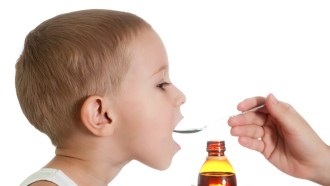
Kids are safer when parents use precise tools to measure liquid medicines. Switching from teaspoons to metric tools could help, a new study finds.
- Math
Scientists Say: Y-axis
The bars on a graph tell you nothing unless you know what they mean. The lines on the sides can let you know.
- Math
Scientists Say: X-axis
The bars on a graph tell you nothing unless you know what they mean. The lines on the sides can let you know.
- Math
U.S. grasp of science is improving — but there’s a catch
Americans’ grasp of science is improving. But a new study shows that adults’ scores can vary depending on how questions are phrased.
- Math
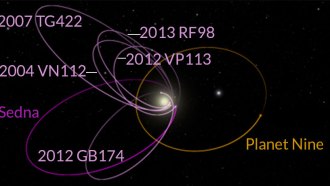
Hunt is on for new Planet Nine
Lots of clues point to the likelihood that a mystery planet lurks in the outer suburbs of our solar system. Math and the screening of old photos may turn it up.
- Math
Scientists Say: Quartile
A quartile might sound like a fourth. But that’s not quite what it is.
- Brain
Parents’ math anxiety can ‘infect’ kids
A study of first- and second- graders found that kids whose parents fear math learn less math at school ¬— but only when parents help with homework.
- Earth
Phoning in earthquakes
Sensors in your internet-connected phone, tablet or personal computer could help detect earthquakes more quickly and reliably.
- Math
New math: Fail + try again = real learning
Hands-on instruction by trial and error is gaining traction. Kids really can learn mightily from their mistakes.