Oceans
- Oceans
Explainer: What are corals?
Though they can look like rocks or plants, corals are animals. Most are made up of colonies of individuals called polyps.
- Environment
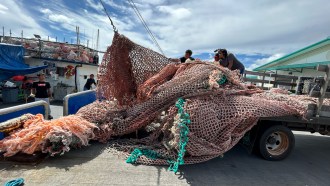
Hawaii is turning fishnets and other plastic trash into roads
Scientists are testing whether plastic pollution from the ocean can be transformed into safe and durable highways.
- Life
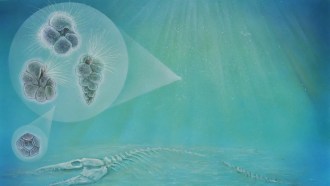
After the dino-killer asteroid, life bounced back quickly
New ocean dwellers arrived millennia — maybe decades — after the Chicxulub impact. That forces a rethink of evolution's response to wipeout events.
- Oceans
Experiment: Build your own beach!
Summer is a time for sun and sand. If you live inland, build your own mini beach in this science experiment.
- Oceans
The sea surface covered by seaweed is now as big as South America
The first global mapping of macroalgae blooms in the ocean, last year, reveals rapid growth and a new record for the area seaweed blankets.
- Animals
Some Antarctic fish arrange their nests into odd shapes
Scientists found nests organized into curves, clusters and ovals on the Antarctic seabed. Such groupings may protect the fish eggs from predators.
- Climate
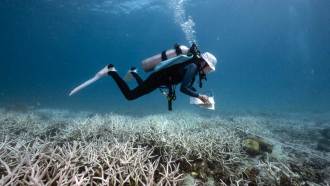
Global coral die-offs signal Earth’s first climate tipping point
The corals offer a dire warning, scientists say, and suggests that more such catastrophic points of no return could occur soon — some within a decade.
- Animals
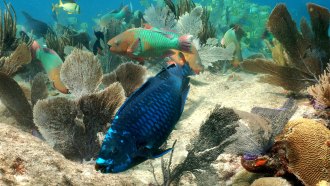
Parrotfish shape the future of coral reefs, one bite at a time
Could these colorful fish aid struggling coral? Yes, but not always. Parrotfish play a complex role in reefs — and sometimes may cause harm.
- Animals
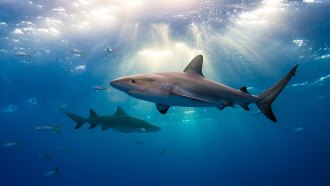
Save the sharks to save the ocean
Humans have driven sharks and their cousins to the brink of extinction, but it’s not too late to turn the tide. At stake is the health of the entire ocean.
- Animals
Explainer: What is a shark?
These fish have skeletons made of cartilage, not bone — and aren’t nearly as scary as portrayed in the media.
- Animals
A shark encounter inspired this researcher’s career in marine biology
Heidy Martinez never wanted to study sharks as a kid. That changed after encountering a white shark in South Africa.
- Animals
Whale pee is an ocean bounty
Some migrating cetaceans move thousands of miles to their breeding grounds, where whale urine fertilizes ocean waters with valuable nutrients.