Physics
- Physics
Science in Hollywood
Audiences are getting smarter, so the makers of movies, TV shows and video games are responding by enlisting scientists to make everything on screen appear even more authentic.
- Animals
Eyelashes: The ‘sweet’ length
New mathematical and aerodynamics studies find what seems to be the optimal length for eyelashes — the length that protects best. And surprise: Longer is not always better.
- Climate
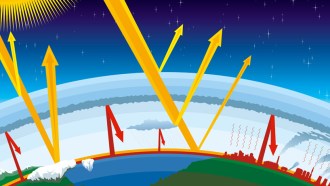
Scientists confirm ‘greenhouse’ effect of human’s CO2
Government scientists link directly, for the first time, a boost in warming at Earth’s surface to increasing levels of carbon dioxide. Much of that gas has been released by human activities, such as coal burning and gas-burning vehicles.
- Chemistry
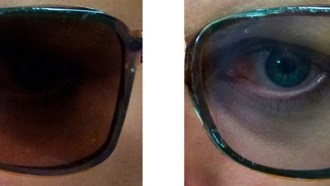
Sunglasses on demand
Plastics that conduct electricity let new color-changing sunglasses go from dark to light and back again at the tap of a switch. The shades could come in a range of colors too.
- Physics
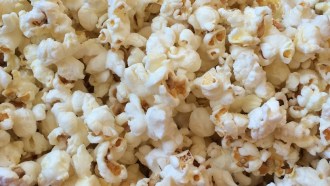
How popcorn got its pop
Popcorn is a popular treat. Now, scientists have learned exactly what happens as it pops. They also have come up with an experiment they hope you will try.
- Computing
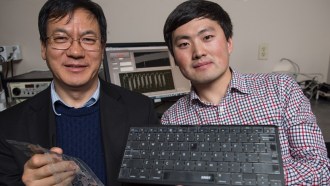
This ‘smart’ self-cleaning keyboard is powered by you
A new electric keyboard locks out anybody but its owner. It’s not only self-cleaning but also powered by your fingertips.
- Materials Science
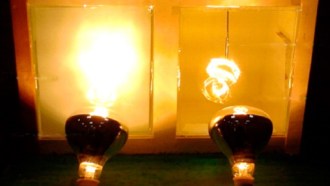
‘Smart’ windows could save energy
Tiny chemical droplets in a liquid sandwiched between panes of glass turn cloudy when they warm up. This will block some sunlight and potentially save on air conditioning bills.
- Physics
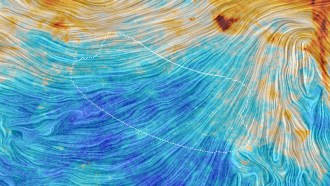
Dust erases evidence of primordial gravity waves
In March 2014, scientists claimed to have found the first echoes of the Big Bang — ripples in the very fabric of space. A new analysis shows the experts were mistaken. Dust appears to explain the confusion.
- Materials Science
Scientists Say: Colloid
When water hovers in the air as fog and when bits of fat disperse in water as milk, they form a type of substance called a colloid.
- Physics
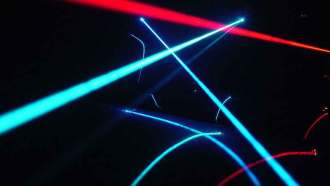
Sometimes light is not so fast
The speed of light is often called a “constant.” Experiments now show that light doesn't always reach its top speed.
- Animals
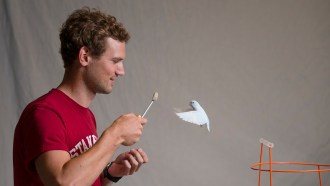
How birds stay in the air
The sensors inside a boxy device measure the forces generated with each stroke of a bird’s wings. Learning how much force is needed to keep a bird aloft could help in designing future drones that flap, hover and dart.
- Physics
Machine simulates the sun’s core
A machine heats iron atoms to temperatures that match the interior of the sun. This has helped solve a solar mystery.