Physics
- Genetics
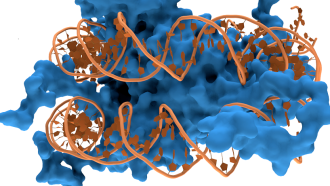
How DNA is like a yo-yo
When not in use, DNA coils tightly. But it must uncoil for the cell to ‘read’ its genes. Physical forces affect how easily that happens, new data show.
- Materials Science
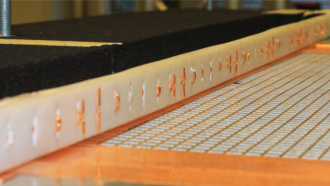
New mirror picky in what it reflects
A new type of mirror is selective in the light it reflects. It allows some wavelengths of radiation to pass through, while others bounce off.
- Animals
Why you’ll never see a dirty gecko
By knowing how a gecko’s skin works, could self-cleaning, water-repelling, antibacterial clothes be far behind?
- Physics
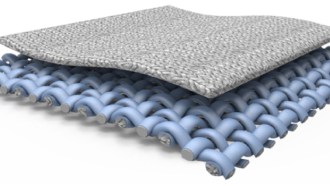
‘Smart’ clothes generate electricity
Scientists in South Korea have developed a fabric that captures energy from its wearer’s motions and turns it into electricity.
- Physics
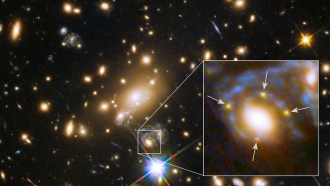
Galaxy cluster creates ‘magnifying glass’ in space
A massive galaxy’s gravity is so strong that it bends light, creating a “lens” in space. This natural magnifying glass is giving astronomers a rare view of a supernova on the other side of the universe.
- Physics
How to pick up messages after they’re gone
By watching for light’s ‘echoes,’ physicists think they can retrieve information being relayed by or as light. It could make it possible for astronomers to view distant objects without having to see the light they cast off.
- Physics
Science in Hollywood
Audiences are getting smarter, so the makers of movies, TV shows and video games are responding by enlisting scientists to make everything on screen appear even more authentic.
- Animals
Eyelashes: The ‘sweet’ length
New mathematical and aerodynamics studies find what seems to be the optimal length for eyelashes — the length that protects best. And surprise: Longer is not always better.
- Climate
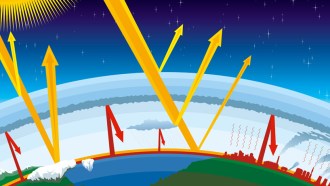
Scientists confirm ‘greenhouse’ effect of human’s CO2
Government scientists link directly, for the first time, a boost in warming at Earth’s surface to increasing levels of carbon dioxide. Much of that gas has been released by human activities, such as coal burning and gas-burning vehicles.
- Chemistry
Sunglasses on demand
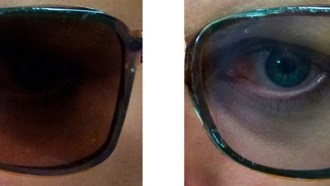
Plastics that conduct electricity let new color-changing sunglasses go from dark to light and back again at the tap of a switch. The shades could come in a range of colors too.
- Physics
How popcorn got its pop
Popcorn is a popular treat. Now, scientists have learned exactly what happens as it pops. They also have come up with an experiment they hope you will try.
- Computing
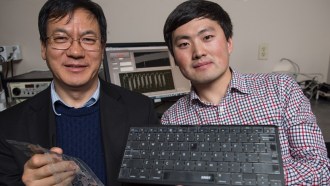
This ‘smart’ self-cleaning keyboard is powered by you
A new electric keyboard locks out anybody but its owner. It’s not only self-cleaning but also powered by your fingertips.