Planets
- Planets
Visiting Pluto
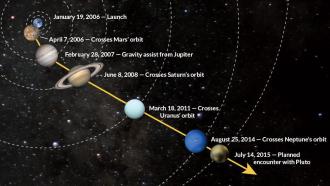
Pluto has long been little more than a dark spot in the sky. Now NASA’s New Horizons spacecraft is about to fly by this dwarf planet. Along the way, it will collect unprecedented data on it.
- Planets
Super-earths not a place for plate tectonics
Plate tectonics build big mountain ranges on Earth. But super-Earths would be too big for such movements to occur, a study finds.
- Planets
Teen finds exoplanet
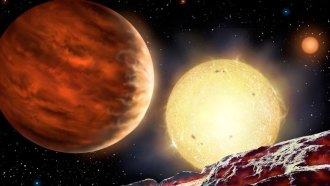
Tom Wagg discovered exoplanet WASP-142b while doing an internship. Just 15 at the time, he is possibly the youngest person ever to find an exoplanet.
- Planets
Cosmic collision may have given birth to Pluto’s moons
Hubble Space Telescope photos reveal that the Pluto family may have formed from debris left behind after something slammed into the dwarf planet.
- Earth
Asteroids boiled young Earth’s oceans
At least two asteroids hit Earth 3.3 billion years ago. This superheated the atmosphere, boiled the oceans and shaped how early life evolved.
- Planets
Mini-sats: The trick to spying Earth-bound asteroids?
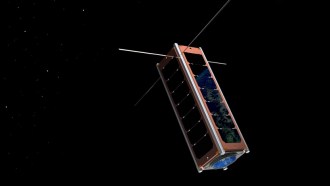
NASA is supposed to begin nonstop screening by 2020 for all asteroids that could pose a threat to Earth. Some astronomers now think the only way to affordably meet that deadline is by using mini-satellites
- Planets
Something’s cooking on Saturn’s moon
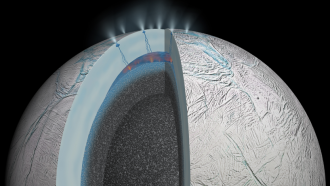
Grit in one of Saturn’s rings likely formed in hot water on the planet’s ice-covered moon Enceladus. That suggests conditions on this moon might be able to support life.
- Chemistry
Asteroid impacts may have sparked life on Earth
The energy produced by comets and asteroids that collide with Earth may have been strong enough to start life.
- Planets
Comet probe may shed light on Earth’s past
Scientists spent more than two decades setting up Philae’s months-long investigation of a comet. What they hope to learn could shed light on Earth’s childhood — and the source of its water. But that’s if problems with Philae’s landing don’t cut the robot’s life span.
- Planets
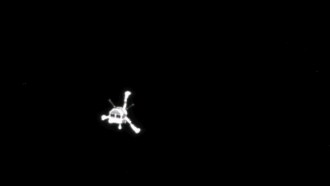
Picture This: Falling to a comet
After a more than decade-long ride, a robotic lander has left its spacecraft and floated down onto the surface of a comet. From there it should begin scouting for hints at how our solar system formed.
- Planets
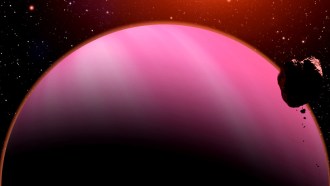
Distant world hosts water
One measure of an extraterrestrial world’s potential for supporting life is the presence of water. The Neptune-size HAT-P-11b fits that criterion.
- Planets
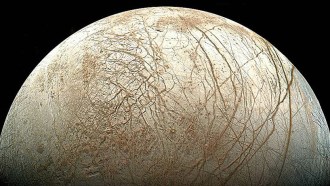
This moon’s surface slides, just like Earth’s
Europa is one of Jupiter’s giant, icy moons. Scientists say it has plate tectonics, which means its surface is covered by moving, giant slabs.