All Stories
- Animals
Let’s learn about the creatures of Halloween
Check out the real-life vampires and zombies of the animal kingdom, and learn why people think ghosts and mummy curses are real.
- Animals
Cockatoos learn from each other how to open garbage bins
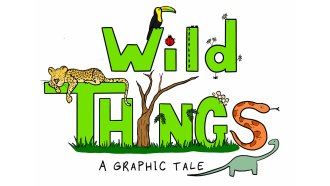
The bin-opening behavior is an example of social learning. It’s also the basis of a foraging culture. Learn more in this web comic.
- Brain
It doesn’t take a concussion for head hits to harm young brains
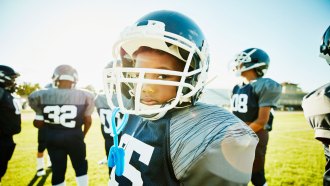
Most head impacts while playing football do not cause concussions. Yet even lesser impacts take a toll in young athletes, scans of their brains show.
- Animals
Scientists Say: Marsupial
These mammals are known for riding around in a pouch on their mother’s belly, where they continue developing after they’re born.
- Animals
Racism lurks in many plant and animal names. That’s now changing
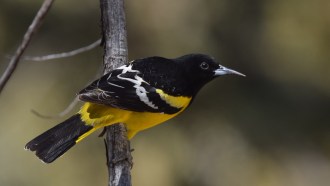
Racist legacies linger in everyday lingo for birds, plants and other organisms. Some scientists now see the chance to change that.
- Health & Medicine
Gender-affirming care improves the mental health of transgender youth
Several states have tried to restrict access to gender-affirming health care for transgender youth. That goes against medical guidelines.
- Earth
Here’s how ice needles can sculpt natural rock art
Striking stone patterns adorn remote cold landscapes the world over. The recipe for these adornments: Freeze, thaw, repeat.
- Agriculture
Potty-trained cows could help reduce pollution
About a dozen calves have been trained to pee in a stall. Toilet training cows on a large scale could cut down on pollution, scientists say.
- Tech
Will you learn better from reading on screen or on paper?
Some studies find students don’t learn as well by reading on screens as from paper. But that's not always true. Here’s how to make the most of reading in either format.
- Chemistry
Scientists Say: Electron
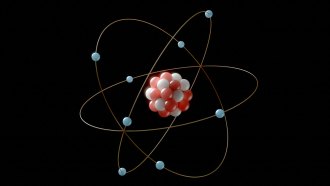
Electrons are negatively charged particles. They are attracted to the positively charged particles in the center, or nucleus, of an atom.
- Health & Medicine
A single vape session can harm immune cells in the body
Vaping creates molecules in the body that can attack cells and cause damage.
- Animals
What biologists call a species is becoming more than just a name
The tree of life — evolution — has been reshaping how scientists name and classify organisms. Some want naming to reflect evolutionary groups even more.