The Cyclops may be an ancient myth, but one-eyed creatures are real
Single eyes are scattered throughout the animal kingdom — and our evolutionary history
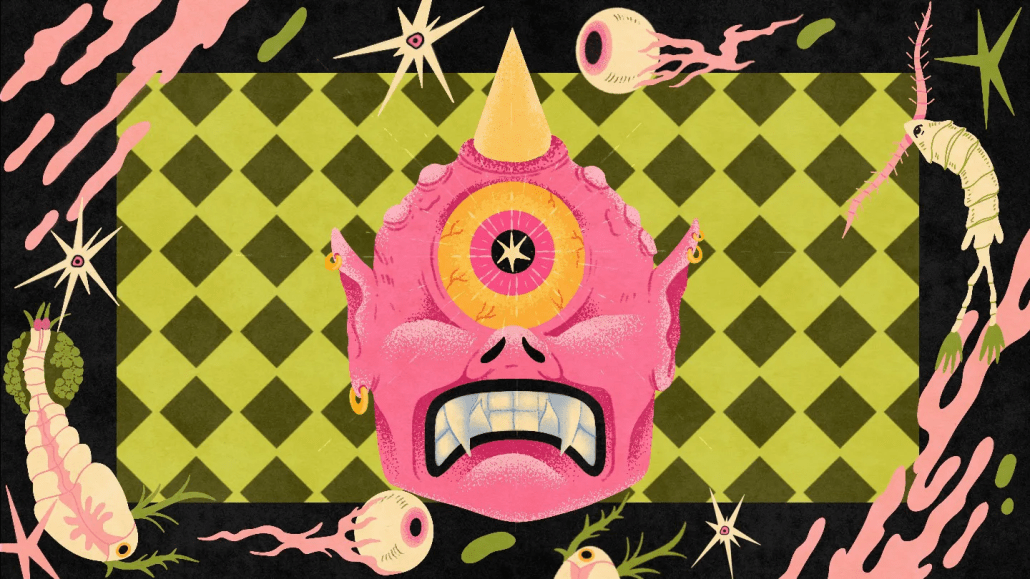
In the Greek epic poem The Odyssey, the Cyclops preys on the crew of Odysseus, the mythical king of Ithaca. These one-eyed giants don’t exist. But several animals evolved a single eye, including the ancestor of all vertebrates.
Andreea Dumuta
This is a human-written story voiced by AI. Got feedback? Take our survey . (See our AI policy here .)
The seeing world is dominated with eyes that come in sets of two or more. But single-eyed oddities have long had a place in the animal kingdom — and our imagination.
Perhaps the most famed of these creatures is the Cyclops Polyphemus. He appears in The Odyssey, an ancient Greek tale by Homer. It got turned into a live-action movie earlier this year. As Odysseus and his men reached the island of Sicily on their epic journey home, they found a formidable foe. This giant, one-eyed creature had a taste for sailors. As chronicled in the tale, the Cyclops held the men captive, then ate them two-by-two — until he was outsmarted.
In a modern version of the story, Percy Jackson ends up in a similar misadventure. Polyphemus takes captive Percy’s satyr buddy Grover. But Percy prevails because he has a cyclops on his side, his brother Tyson.
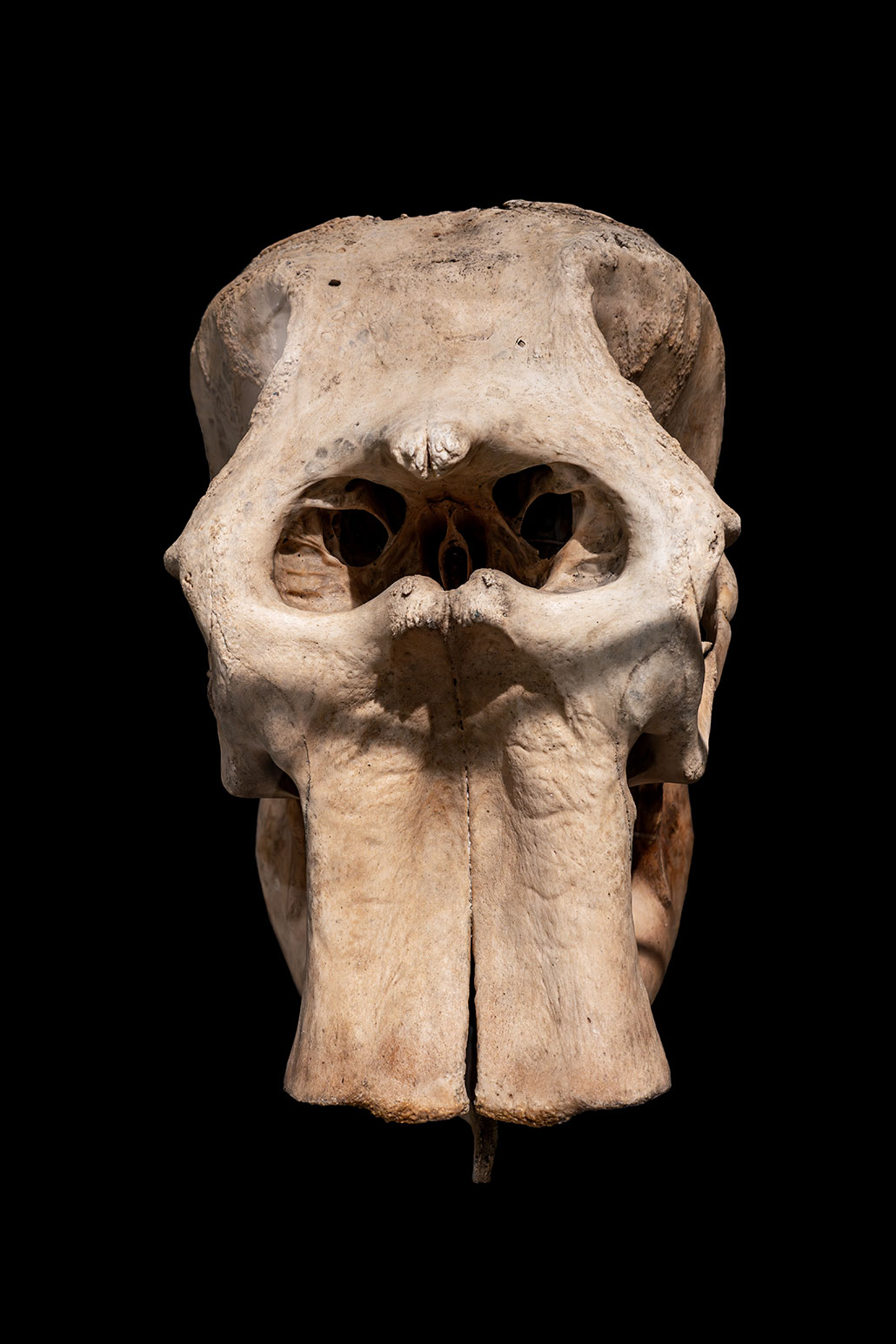
While the stuff of mythology, Cyclopes may have their roots in biology. Homer and the ancient Greeks, for instance, may have misinterpreted fossils — especially those of prehistoric elephant ancestors.
In the time of Homer, “nobody in Greece had ever seen a living elephant,” says Adrienne Mayor. She’s a historian of ancient science at Stanford University in California. Ancient peoples thought the immense bones of massive mammals belonged to giants, heroes and mythical creatures.
Those elephant ancestors had a big opening in the center of the skull for the trunk. That could have led ancient Greeks to think the creature had one big eye. “The eye sockets,” she notes, “are really not very noticeable.”
While this possible inspiration for the Greek Cyclops may not have actually had one eye, several creatures have evolved over time to have a single eye.
One-eyed wonders
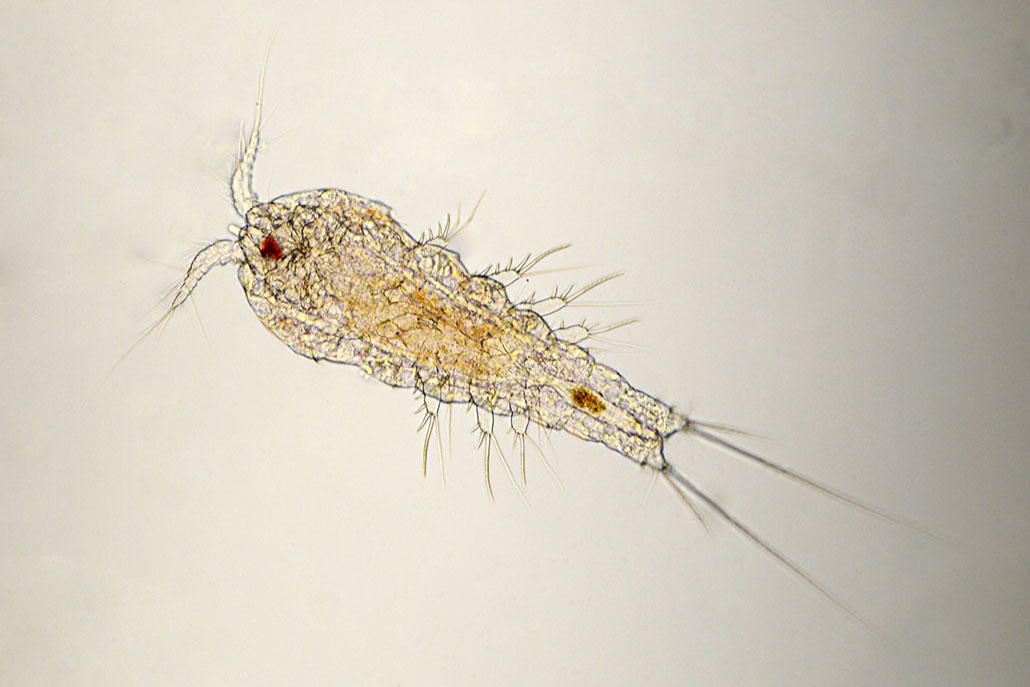
To find a real one-eyed creature, just visit an ocean. Tiny crustaceans called copepods are about a millimeter (0.04 inch) long. They make up a big share of the base of the food chain in oceans and many bodies of water. A single, bright red eye peers from between two antennae on the heads of some species.
Copepod eyes “wouldn’t have high resolution like [our eyes] would,” says Megan Porter. She’s an evolutionary biologist. She studies visual systems at the University of Hawaiʻi at Mānoa. A copepod’s fairly simple eyes contain three cuplike structures that sense light. They point in different directions, which probably gives copepods a broad field of vision. That vision is good enough, Porter says, to guide copepods that live in the ocean to navigate from shallow waters at night to deeper waters during the day. That helps them to evade predators.
But copepods aren’t the only creatures to have had only one eye. Around 560 million years ago, an ancestor of all vertebrates — including us — also had a single “median eye” on the top of its head. This eye could detect light but couldn’t resolve detailed images.
For this water-dwelling critter, going to one eye was evolutionary innovation. Its ancestor had a pair of eyes on the sides of the head plus another median eye, says George Kafetzis. He’s an evolutionary neuroscientist at the University of Sussex in England. The eyes on either side of the head probably handled navigation. The median eye followed the daily rhythms of the sun.
Kafetzis and his colleagues think this creature then lost the original lateral eyes, retaining only the median one. This might have happened when this creature abandoned its free-swimming lifestyle for a sedentary burrowing one, Kafetzis says. “When you’re partially burrowed,” he says, “the steering eyes don’t have much purpose to serve anymore.”
His team described the evolution of this lone-eyed vertebrate in the February Current Biology.
Do you have a science question? We can help!
Submit your question here, and we might answer it an upcoming issue of Science News Explores
Over a few million years, lifestyles changed again. Vertebrates evolved. Three eyes again became better than one.
Two became the kinds of eyes you’re probably using to read this story. And our “third eye”? It descended into the brain to become the pineal gland. This gland regulates our circadian rhythm based on information it receives from our seeing eyes.
For some reptiles, amphibians and fish, a version of this median eye remains exposed on the top of their head. It can still sense light directly. You could say these examples stretch the definition of the cyclops beyond a centered eye that is the only one on their face.
When one eye is deadly
When a human embryo is growing, it also starts out with a single eye, of sorts. But it only stays like that in rare — and deadly — cases.
As they’re growing in the womb as an embryo, the cells that eventually become eyes begin as a cluster. Later, it will split in two. But in rare cases, genetics or environmental factors can cause cyclopia. In this deadly disorder, that cluster of eye cells doesn’t split and instead develops as one large eye.
“Cyclopia is sort of the extreme end of a whole range of malformations,” says Philip Beachy. He’s a developmental molecular biologist at Stanford University.
Some important clues about how this disorder develops came from Idaho farmers in the 1950s. Some of their sheep ate a few too many corn lily plants while they were pregnant.
“During a drought, [the farmers sent their sheep] to higher pastures so that their flocks would have something to graze on. And they consumed this plant. And guess what? The lambs were born cyclopic,” Beachy says. The plant chemical that caused this was later identified and named cyclopamine (Sy-KLOH-puh-meen).
While today’s one-eyed wonders are a world apart from the monsters of Greek mythology, they still inspire us to explore — and marvel at — our world.