Meet the world’s biggest waves — and the mysteries behind them
Wind, weather, earthquakes and canyons can give rise to truly colossal waves
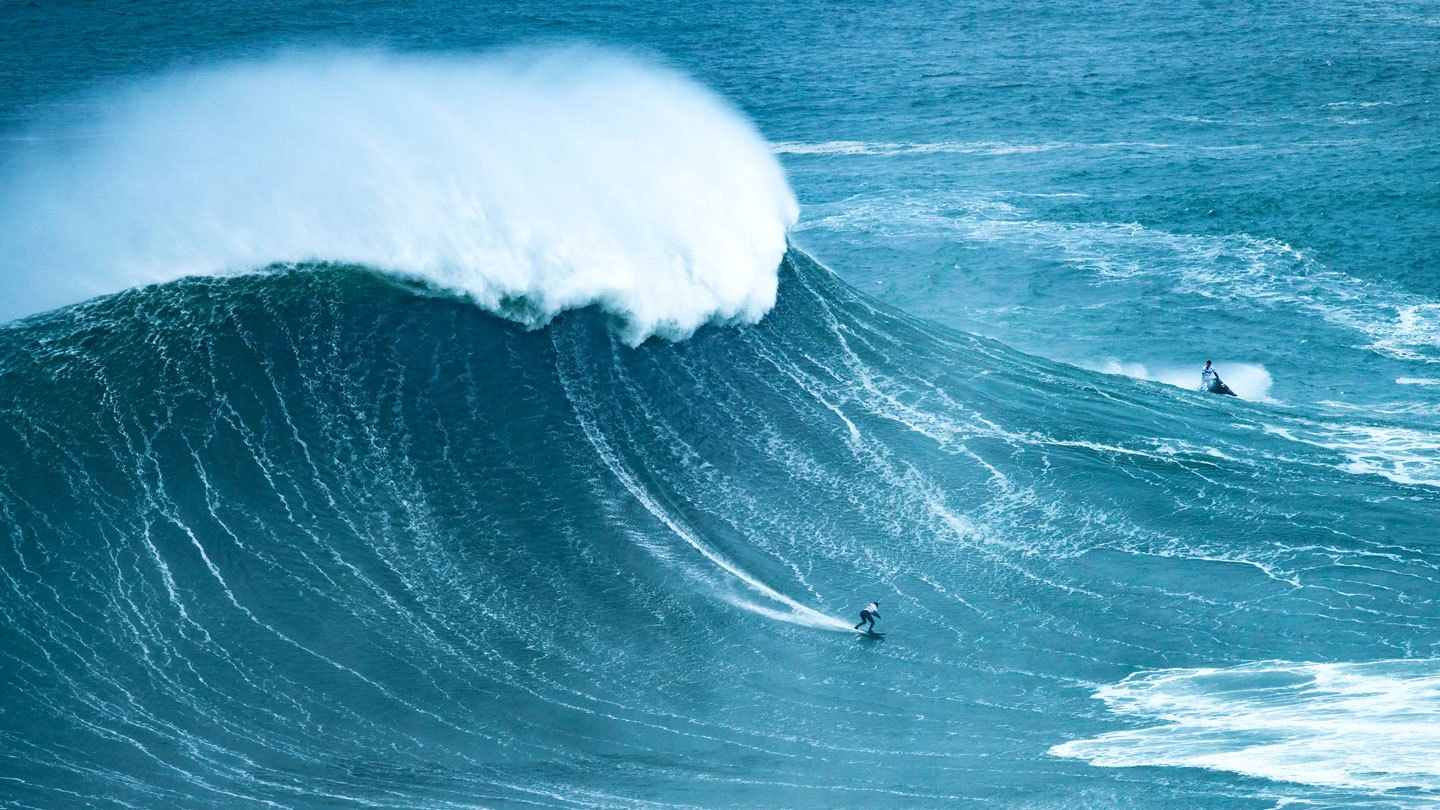
Here, off the coast of Nazaré, Portugal, on October 29, 2020, Sebastian Steudtner set a record for the tallest wave ever surfed. That wave was 26.21 meters (85.99 feet) tall.
SOPA Images Limited/Alamy
This is a human-written story voiced by AI. Got feedback? Take our survey . (See our AI policy here .)
The morning of October 29, 2020, was cool and clear in Nazaré. This coastal town in Portugal is famous for its beaches and vibrant nightlife. It’s also known for its waves. They’re among the largest surfable ones anywhere. Every year, surfers flock here to ride down the monsters that rise out of the sea, especially off the north end of the beach. On this day, conditions were perfect for record-breaking waves.
In the early morning, a jet ski towed German surfer Sebastian Steudtner away from shore to where he met a towering wall of water. The jet ski zipped away to safety in one direction as Steudtner coasted right up to the breaking point.
Then gravity took over.
For 25 seconds, he tore down the wave. As the water broke above him, he raced to the side. Tears streamed out of his eyes because of the wind. “My face was melting,” he later told a Spanish newspaper. He had never felt faster on a surfboard.
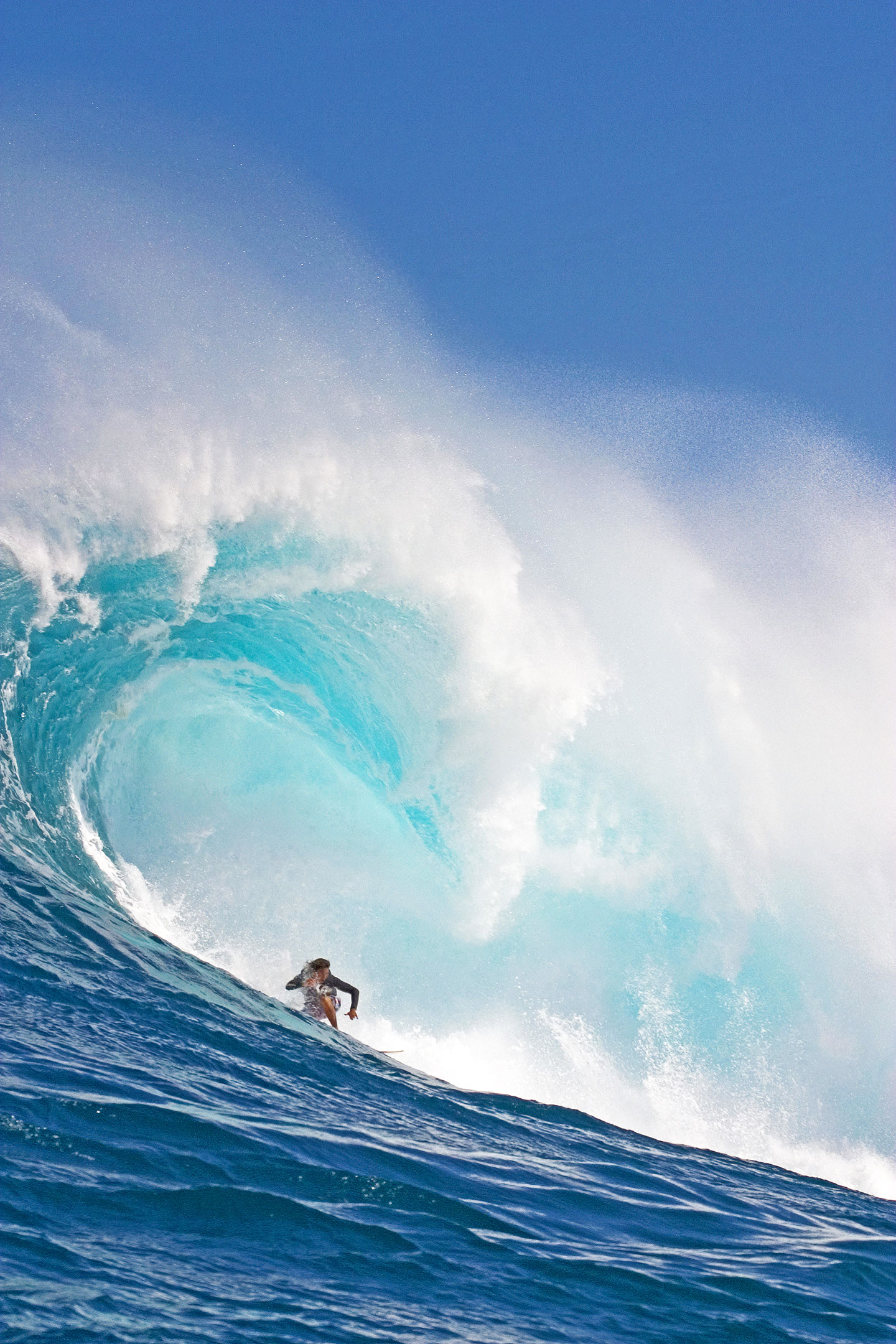
Even for Nazaré, this wave had been a colossus. After Steudtner’s ride, scientists and surfing officials studied footage. They determined this wave had roared in at 26.21 meters (85.99 feet) tall. He had set a new record for the tallest wave ever surfed.
The previous record — 24.38 meters — was also set at Nazaré, in 2017. Steudtner may have since broken his own record. In February 2024, he surfed a wave estimated to be 28.57 meters (93.73 feet) tall. Drone-mounted cameras gauged that height (which hasn’t been formally confirmed) using tech designed in part by Porsche, the German sports car company.
Extreme waves rise from waters around the world. In some places, like the coast of Portugal, they’re the norm. On average, Nazaré’s waves measure 15 to 20 meters (50 to 65 feet) tall.
But those aren’t even the biggest or most dangerous waves known. Enormous waves called tsunamis can cause widespread destruction when they reach shore. Then there are rogue waves: unusual, solitary waves that rise higher than all the waves around them. These can be particularly dangerous for ships that don’t see them coming.
Scientists have found other unusual, risky waves. So-called “sneaker waves,” for instance, can sweep into a beach much farther than expected. People die every year off the U.S. Pacific coast and elsewhere as such sneakers pull them out to sea.
Big waves aren’t limited to oceans, either. Earthquakes or storms can cause seiches (saysh-əs) in an enclosed body of water, such as a lake. These waves roll back and forth like water splashing in a bathtub. Some waves we can’t even see. Internal waves can move below the surface of a waterway, for example.
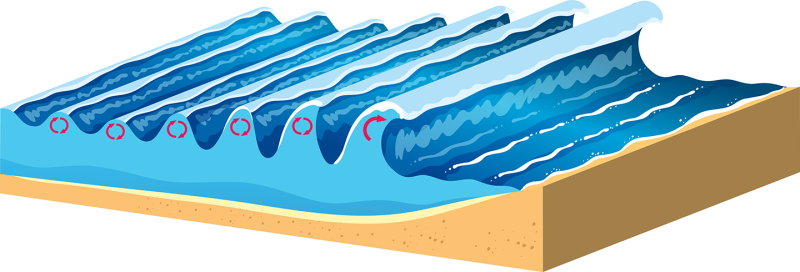
Some scientists study waves because they’re simply fascinating.
But waves are important in many areas of science. Climate researchers are curious about waves that form where air and water meet. Oceanographers study them to understand how energy moves through water and to find ways to better protect coastlines. Knowing more about waves can help navigators find safer shipping routes. Physicists study waves to understand how moving fluids behave. And watery waves can provide insight into the movement of light and sound.
Tori Tomiczek is an ocean engineer at the U.S. Naval Academy in Annapolis, Md. By learning what types of waves cause the most destruction after hurricanes and other big storms, she hopes to design buildings that will better survive them. But, she adds, there’s another reason to study waves. They’re inherently captivating, she says. “I have always just loved the ocean.”
Do you have a science question? We can help!
Submit your question here, and we might answer it an upcoming issue of Science News Explores
How to build a giant
A wave represents pure energy moving through a fluid. Sometimes it’s a lot of energy. The largest wave ever recorded slammed into the protected Lituya Bay in southeast Alaska in 1958. This wave reached a towering 524 meters (1,720 feet).
Scientists determined its height by observing that all trees and loose soil lower than that height had vanished. It created a new treeline. The bay itself was only about 220 meters (720 feet) deep, which means the wave was more than twice as tall. Imagine standing on the shore and seeing an approaching wall of water that was far taller than the Empire State Building.
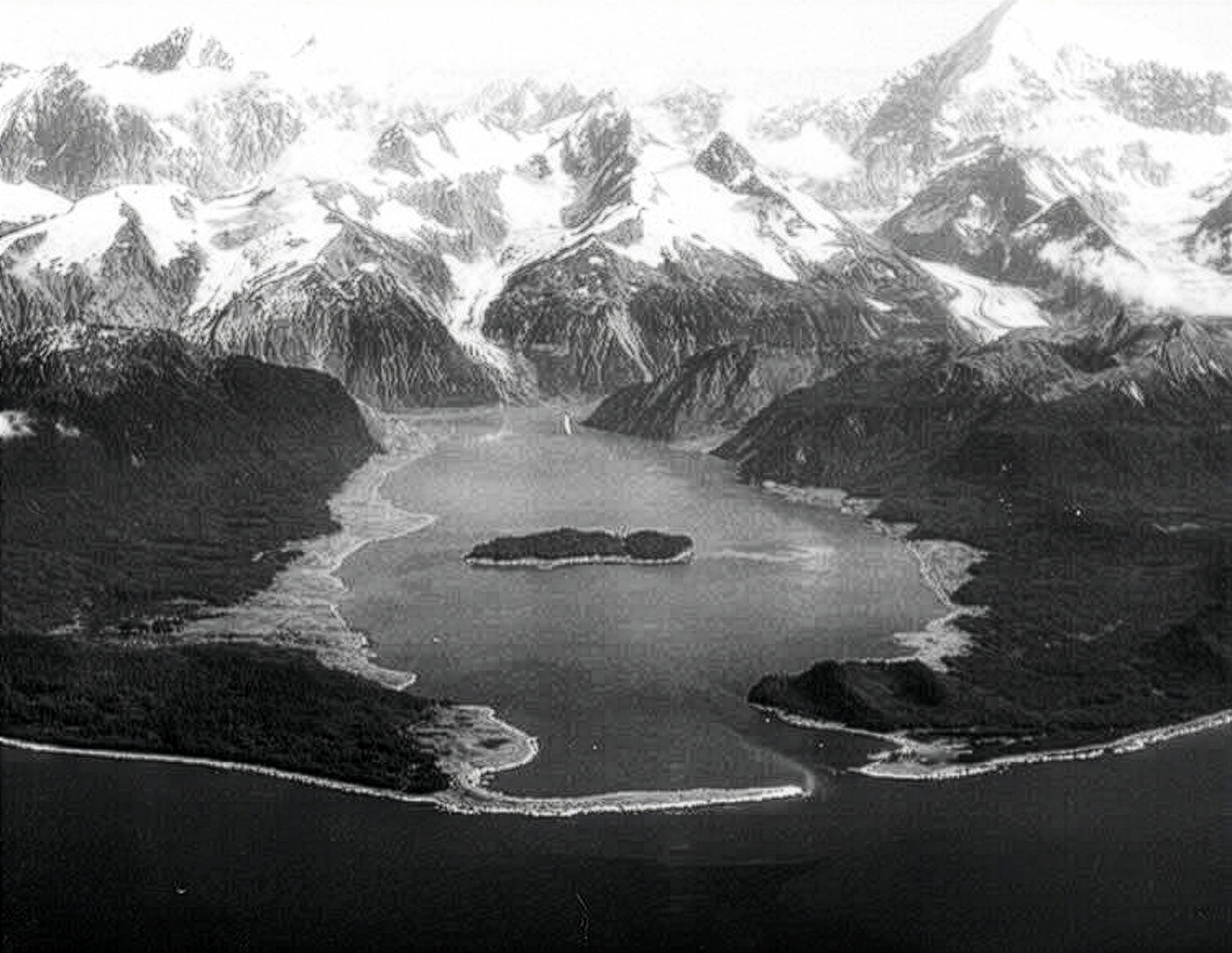
Three fishing boats had anchored in that bay on the night of July 9. Just after 10:15 p.m., a wave about 30 meters (98 feet) high began moving into the bay. One boat lifted its anchor and tried to escape. Its two occupants were never seen again. A second boat, crewed by a man and his seven-year-old son, made it over the crest of the wave and skated down the other side. The captain of the third boat later reported that when his boat was lifted by the wave, he found himself looking down at the trees on the rugged hillsides. His boat was destroyed. He and his wife survived by holding on to debris.
How does a wave get to be so mammoth? The 1958 monster began with a powerful magnitude 7.8 earthquake. It shook the area for a few minutes. Some 90 million tons of rock plunged into the ocean. This released a tremendous amount of energy, causing big waves to rise and race away.
Earthquakes often give rise to big waves. On December 26, 2004, a magnitude 9.1 earthquake rocked Southeast Asia. The tsunami it unleashed reached 30 meters (98 feet) tall by the time it hit Indonesia. More than 200,000 people across the Indian Ocean died, making this one of the deadliest natural disasters in history.
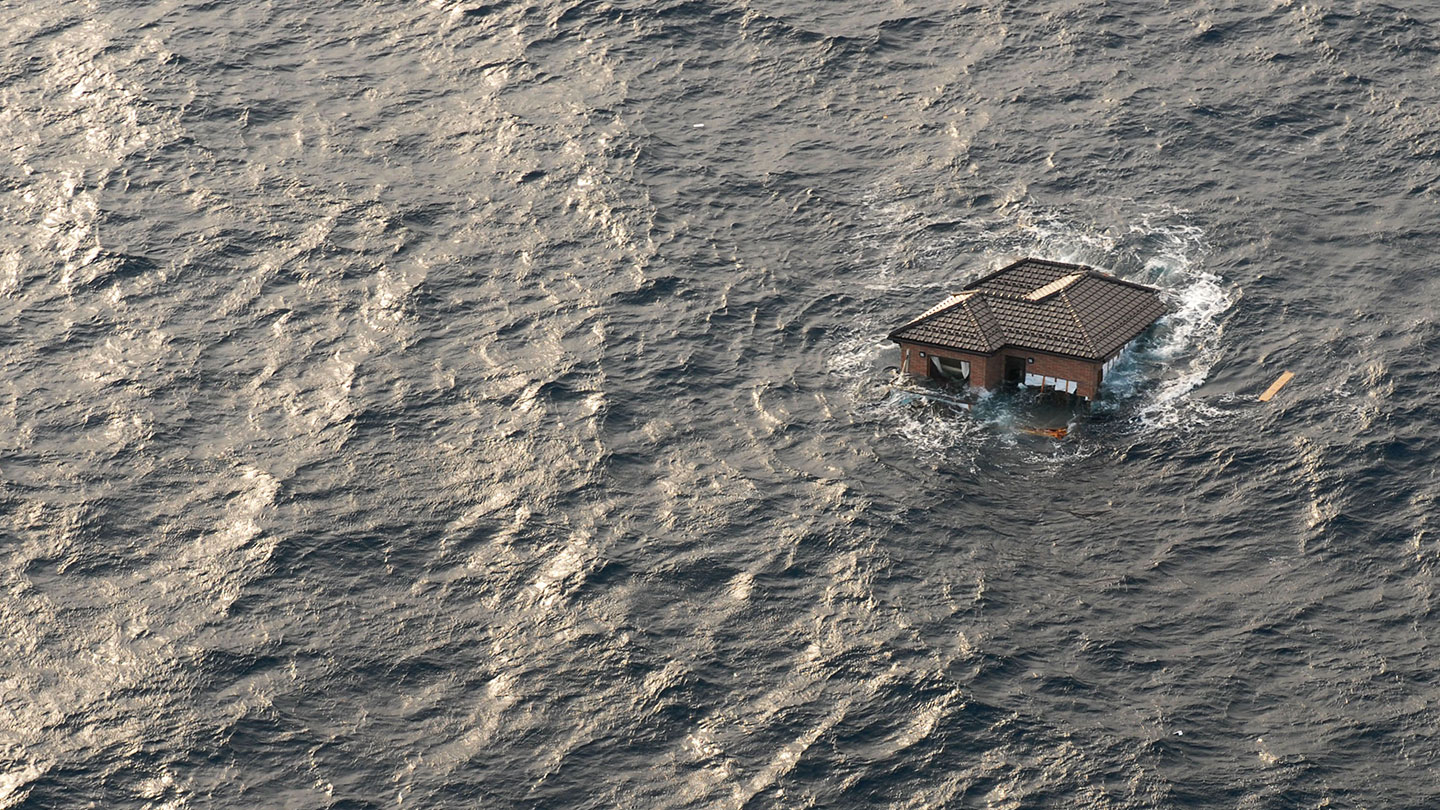
On March 11, 2011, another magnitude 9.1 quake triggered a tsunami off the coast of Japan. It swept ashore killing about 18,000 people there — and caused the meltdown of three nuclear reactors.
From seasonal to surprising
Storms, too, whip up big waves. So can the shape of the seafloor. Geologists have traced the big surfing waves off Nazaré, for instance, to a deep undersea canyon — one of the largest in Europe.
That narrow canyon runs east to west. It stretches from near the coast to about 210 kilometers (130 miles) offshore. Waves streaming in over the canyon pile up higher and higher. When they merge with waves coming from other directions, they can produce true monsters. The October 2020 Nazaré wave had yet another contributor: energy from the remnants of a hurricane that had recently passed through. By the time Steudtner took to the water, the waves had become ginormous.


Nazaré’s North Beach also created a thick band of white foam along the shoreline.Left: NASARight: NASA
Weather and earthquakes can’t explain every type of wave. Consider rogues, which were once the stuff of legends.
More than 500 years ago, Christopher Columbus reported a giant wave nearly swamped his ship as it sailed through a strait off the coast of present-day Venezuela. And in 1826, French explorer Jules Dumont d’Urville described a huge, catastrophic wave in the Indian Ocean. At the time, almost no one believed him.
Today, oceanographers define rogue waves as those at least twice the average height of the waves around them. And they can emerge without warning.
The first rogue wave ever observed by scientists, known as the Draupner Wave, hit an oil platform in the North Sea on January 1, 1995. It damaged railings and equipment. Laser sensors mounted on the platform revealed the wave reached 25.6 meters (84 feet) tall.
This wave didn’t injure anyone. But that wasn’t true for three rogue waves in 2010, each less than half the Draupner’s height. After leaving Barcelona, Spain, the cruise ship Louis Majesty was headed for Genoa, Italy. But somewhere off the French coast, a giant rogue wave pummeled the ship, tossing it around and breaking windows. Two passengers died.
Physicists do not agree on how rogues form. Some have investigated the idea of “crossing waves.”
When lines of waves intersect, they can pile up on each other, boosting their height. Two waves with the same height can combine to form one far taller wave. This is called constructive interference. The energy from individual waves gets concentrated into a larger wave that stands taller, explains Francesco Fedele. He’s an engineer at the Georgia Institute of Technology in Atlanta.
“When you have an intensification of waves, they can grow up more and more,” he says.
But that’s not the whole story.
Waves are complicated. They are shaped both by the water and the air. When they collide, something called “second order” effects may develop. These are like side effects of side effects. You can get unexpected behaviors and unexpected heights not predicted by just adding individual waves together.
In recent work, Fedele showed how second-order effects can give rise to rogue waves. This work may not only help scientists better understand waves but also assist navigators who steer ships through rough waters. Energy companies and government agencies have used his models to help forecast where these waves will emerge and how to withstand them.
How to measure a big wave
Miguel Onorato is an oceanographer at the University of Torino in Italy. He’s studied the behaviors of rogues and other waves for more than two decades. In June 2018, he boarded the S. A. Agulhas II, a ship designed to support scientific research. It was headed from Cape Town, South Africa, to Antarctica.
This was winter in the Southern Hemisphere. Some scientists on board planned to study birds, including albatrosses and penguins. Others wanted to measure pollution in the water. An artist came along looking for inspiration. Onorato was part of a team that came to study waves.
Winds are relentless and strong in this part of the world. They whip through the Southern Ocean at the highest average speeds on the planet. Storms rage all the time. In 2022, scientists found two sources of tempests here. They’re so strong partly because of how energy travels through the ocean, and partly because there are fewer mountains in the Southern Hemisphere. Mountains can break up storm systems and winds.
Strong winds mean big waves. And waves here can be enormous. “The boat was rolling. I got so sick,” Onorato recalls. “It was incredible.” The artist was seasick almost the entire voyage. But once Onorato was back on his feet, his team set up its equipment on deck.
In the past, he says, scientists measured big waves with floating buoys. Their instruments can track how far up and down the water’s surface moves them. By tracking the rise and fall of these buoys, scientists had a pretty good idea of a wave’s shape.
But the buoys gave only one point of information. They didn’t show how the waves were changing as they moved. To overcome that problem, one of Onorato’s colleagues developed a new system. It uses stereoscopic vision.
The idea was inspired by human vision, Onorato says. Because the brain combines signals from two eyes, people can see in three dimensions. (It’s why someone with only one functional eye will struggle with depth perception.)
Training its two cameras on the same patch of sea gave their new system 3-D vision. A computer helped analyze the resulting video and determine wave heights, as well as other behaviors of the sea.
Rogue waves can form when strong winds cause steep waves to form and intersect, measurements by Onorato’s team showed. These rogues can rise higher than would be predicted just by adding two waves together.
Protecting people
Knowing how and when big waves form offers benefits beyond satisfying scientific curiosity. For instance, Tomiczek at the U.S. Naval Academy wants to help make coastlines safer.
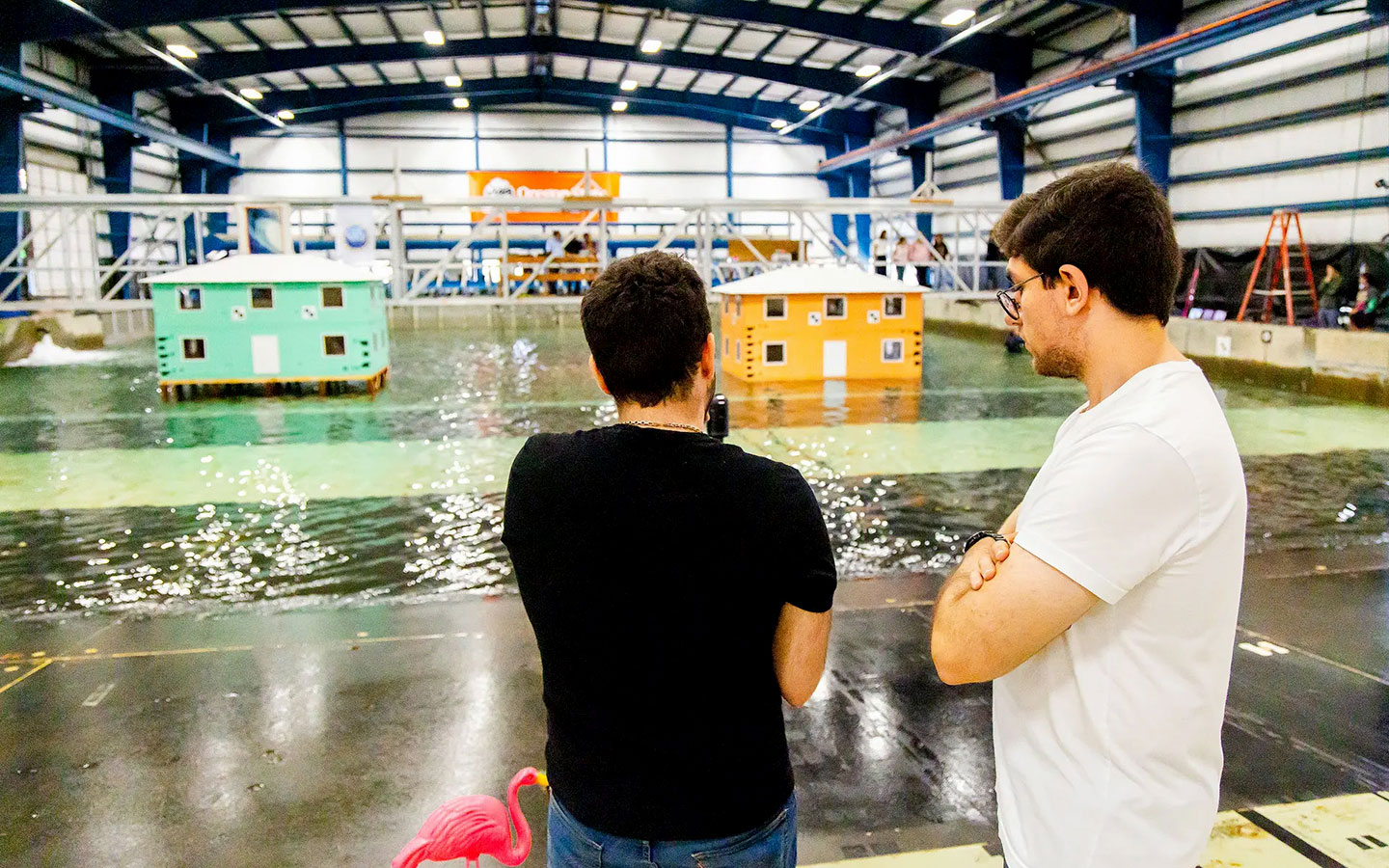
She’s run some of her experiments in an unusual laboratory at Oregon State University in Corvallis. Its long, narrow tank of water — a wave flume — produces big waves. Scientists study how those waves form and what slows them. Tomiczek was part of a group studying how the plume’s waves damaged a house that had been built at one-tenth scale. Learning which types of waves are the most destructive may help her design structures that will better withstand them.
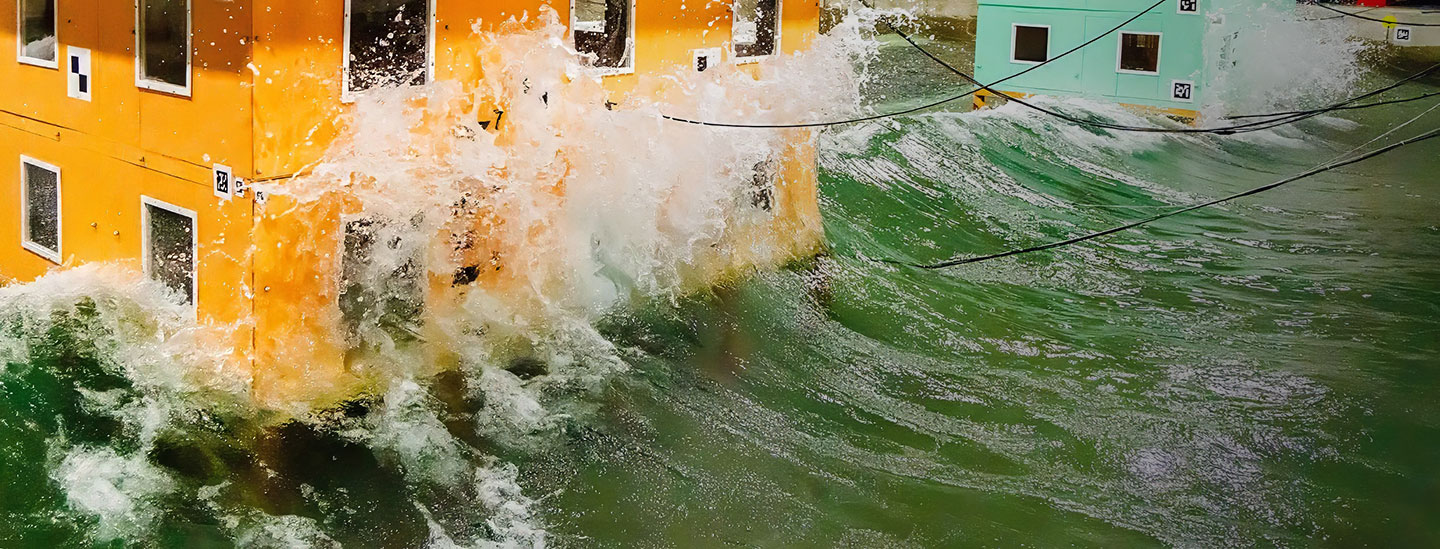
That research calculated how much force a wave exerts on a structure horizontally. This can help engineers figure out the best way to build and which materials to use. These studies could also show how to improve other structures battered by waves, such as bridges and highways.
In other work, Tomiczek is studying how natural features — such as mangrove trees and coral reefs — can buffer waves. Nature may help us find ways to better protect coastlines, she says.
Such data may also help at-risk communities. If people better understand the local threat that big waves pose, they can prepare. Tomiczek says they can build stronger structures and plan how to help each other when a destructive one hits. This could build “kind of a community resilience,” she says.
Her wave research was launched by her love of the ocean. But Tomiczek also enjoys thinking about how the ocean connects people around the world. At one beach, she says, people can surf or bodysurf or enjoy the waves. Somewhere on the other side of the country or world, the waves might be too powerful for swimming.
“When I was living on the West Coast, we called [the ocean] the mighty Pacific because it’s this different, untamable, incredible thing,” she says. If you love the ocean, Tomiczek says, it’s hard not to wonder about what makes a big wave. “It’s just so cool to me to think about all of the incredible processes that are behind that.”