All Stories
- Animals
Some beetles walk along the underside of the water’s surface
Their upside-down scurrying is a rare method of getting around.
- Space
Moon-sized white dwarf is the smallest ever found
This dead star is also spinning very fast and has an amazingly powerful magnetic field.
- Animals
Dinosaur families appear to have lived in the Arctic year-round
Fossils of baby dinosaurs in northern Alaska challenge the idea that northern dinosaurs only spent their summers in the high Arctic.
- Animals
Spiders can take down and feast on surprisingly big snakes
Snared in sticky webs and subdued by poison, even venomous snakes can become a spider’s soup.
- Climate
‘Zombie’ wildfires can reemerge after wintering underground
Climate change may make these not-quite-dead blazes more common. Scientists are learning to predict where a zombie might emerge.
- Fossils
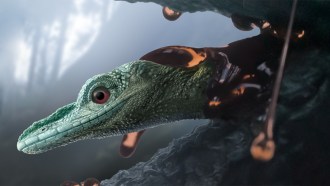
Ancient creature revealed as lizard, not a teeny dinosaur
CT scans of 99-million-year-old fossils of hummingbird-sized specimens trapped in amber reveal a number of lizardlike features.
- Life
Let’s learn about microbes
There may be a billion species of microorganisms on Earth — but scientists have only discovered a small fraction of them.
- Physics
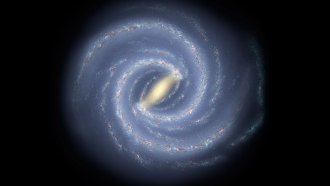
Spin in this Milky Way bar may show cosmic dark matter does exist
A method akin to studying a tree’s rings reveals the timeline of a slowdown in those stars at the heart of our Milky Way galaxy.
- Animals
Birds could get their sense of direction from quantum physics
Songbirds could detect north and south using a protein in their eye. It works somewhat like a compass.
- Animals
A bubble of air lets some lizards breathe underwater
Anolis lizards leap into streams to escape danger. Now researchers have figured out how they can stay underwater for up to a quarter of an hour.
- Archaeology
Fossils unearthed in Israel reveal possible new human ancestor
They come from a previously unknown Stone Age group that may represent a complex mashup of early members of our genus Homo.
- Physics
Nuclear clocks are nearly here
More precise clocks could improve technologies such as GPS and help scientists test major ideas in science.