All Stories
- Psychology
Everyone experiences malicious joy now and then
Called schadenfreude, feeling happy when we see someone else’s pain is typically harmless. But unchecked, it can have big consequences.
- Artificial Intelligence
Chatbots may make learning feel easy — but it’s shallow
People who use search engines gain deeper knowledge and care more about what they learn than those who rely on AI chatbots, a new study finds.
- Animals
Is it possible to be invisible?
Fiction is full of characters with the power to vanish. But some animals have real-life ways to become nearly invisible.
- Microbes
Let’s learn about viruses
Viruses cause a huge range of illnesses, but vaccines can help protect you against these infections.
- Animals
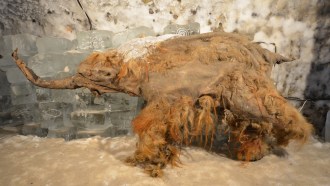
RNA from mummified woolly mammoth is the oldest ever recovered
Genetic details from the animal, named Yuka, give a snapshot into its last moments alive. The mammoth had been preserved in permafrost for 40,000 years.
- Earth
Scientists Say: Haboob
Thunderstorms in the desert create downdrafts that lift desert sand into a moving, wall-like cloud.
- Physics
Energy may seem to disappear, but there’s a law against that
When a ball rolls to stop or a phone battery dies, it’s energy didn't vanish — it just morphed to another form. Energy is always conserved.
- Animals
Radioactive animals don’t glow — but do show the power of radiation
Wild species exposed to nuclear contamination help show how radiation affects living things — including its risks to people.
- Environment
Nuclear weapons tests many decades ago have left a radioactive legacy
Decades of aboveground nuclear weapons tests, starting in the 1950s, lightly littered the planet with toxic fallout, which appears to have sickened some people.
- Materials Science
‘Stenciling’ tiny gold particles gives them new properties
Decorating nanoparticles with other chemicals could give them useful properties for medicines, textiles and more.
- Fossils
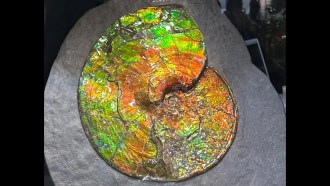
Here’s why ammolite gems have a rainbow shimmer
The fossils’ fabulous colors arise from delicate assemblies of crystal plates.
- Health & Medicine
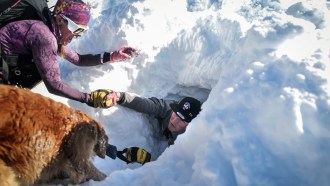
Recruits agreed to be buried face down in the snow, for science
A safety device helped maintain the buried person’s oxygen levels for a half hour or more, which might provide time for an avalanche rescue.