All Stories
- Life
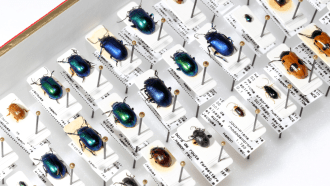
Scientists Say: Taxonomy
This field of study does more than just organize living things. It also reflects the history of life's evolution.
- Space
This cosmologist studies the invisible parts of the universe
Katie Mack started out building solar-powered LEGO cars as a kid. Now she studies dark matter to better understand how galaxies form and evolve.
- Science & Society
Linking science to dance, culture and more expands who can take part
Through movement, sound, culture and community, some researchers are expanding the ways we learn, think about and communicate science and engineering.
- Physics
Chopping an onion? Sharp knives can keep its juice out of your eyes
Slow and steady cuts with a sharp blade, video shows, can reduce the pain-inducing spray of tiny onion-juice droplets.
- Animals
Some Antarctic fish arrange their nests into odd shapes
Scientists found nests organized into curves, clusters and ovals on the Antarctic seabed. Such groupings may protect the fish eggs from predators.
- Life
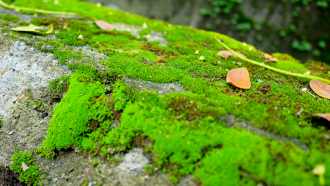
Let’s learn about life forms that have survived in space
Moss spores, bacteria and tardigrades have all proved their hardiness outside the International Space Station.
- Math
Scientists Say: Logarithm
Think of this math function as just another way to solve equations involving exponents.
- Chemistry
Scientists finally know why ice is so slippery
It’s not because ice heats up and then partially melts. Rather, ice changes at the molecular level — a process scientists have finally modeled.
- Fossils
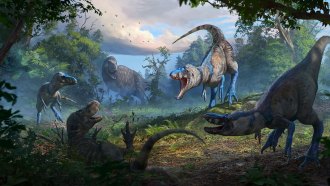
Newfound fossil is not a teen T. rex but a whole new species
Now known as Nanotyrannus, this mini dino could have roamed the late Cretaceous alongside T. rex.
- Brain
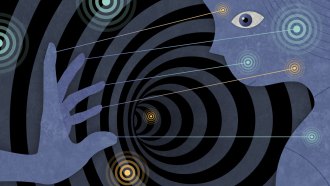
Hypnosis isn’t magic. It’s the brain at work
While we still don’t know much about how hypnosis works, it appears to help some people conquer pain, anxiety and other problems.
- Health & Medicine
Air pollution might harm children’s eye health
Scientists used machine learning to understand air pollution’s role in eye health and vision. They found children have better eyesight in cleaner air conditions.
- Animals
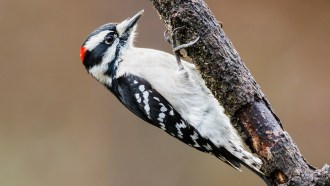
Woodpeckers grunt like tennis players when they peck
The birds grunt like tennis pros when making their rat-a-tat, a strategy that may help steady their movements.