Arctic: A region that falls within the Arctic Circle. The edge of that circle is defined as the northernmost point at which the sun is visible on the northern winter solstice and the southernmost point at which the midnight sun can be seen on the northern summer solstice. The high Arctic is that most northerly third of this region. It’s a region dominated by snow cover much of the year.
biodiversity: (short for biological diversity) The number and variety of species found within a localized geographic region.
biologist: A scientist involved in the study of living things.
climate: The weather conditions that typically exist in one area, in general, or over a long period.
climate change: Long-term, significant change in the climate of Earth. It can happen naturally or in response to human activities, including the burning of fossil fuels and clearing of forests.
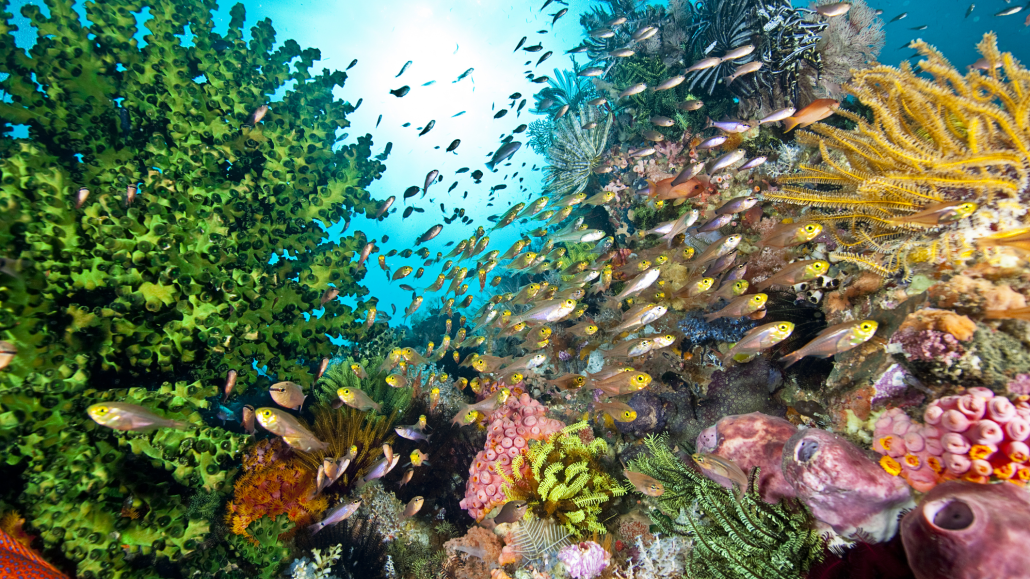
coral: Marine animals that often produce a hard and stony exoskeleton and tend to live on reefs (the exoskeletons of dead ancestor corals).
diversity: A broad spectrum of similar items, ideas or people. In a social context, it may refer to a diversity of experiences and cultural backgrounds. (in biology) A range of different life forms or a range of traits within the population of some species.
ecosystem: A group of interacting living organisms — including microorganisms, plants and animals — and their physical environment within a particular climate. Examples include tropical reefs, rainforests, alpine meadows and polar tundra. The term can also be applied to elements that make up some artificial environment, such as a company, classroom or the internet.
equator: An imaginary line around Earth that divides Earth into the Northern and Southern Hemispheres.
freshwater: A noun or adjective that describes bodies of water with very low concentrations of salt. It’s the type of water used for drinking and making up most inland lakes, ponds, rivers and streams, as well as groundwater.
fungi: (sing: fungus) Organisms with one or more cells that reproduce via spores and feed on living or decaying organic matter. Examples include mold, yeasts and mushrooms.
gene: (adj. genetic) A segment of DNA that codes, or holds instructions, for a cell’s production of a protein. Offspring inherit genes from their parents. Genes influence how an organism looks and behaves.
habitat: The area or natural environment in which an animal or plant normally lives, such as a desert, coral reef or freshwater lake. A habitat can be home to thousands of different species.
pollinator: Something that carries pollen, a plant’s male reproductive cells, to the female parts of a flower, allowing fertilization. Many pollinators are insects such as bees.
rainforest: Dense forest rich in biodiversity found in tropical areas with consistent heavy rainfall.
reef: A ridge of rock, coral or sand. It rises up from the seafloor and may come to just above or just under the water’s surface.
species: A group of similar organisms capable of producing offspring that can survive and reproduce.