All Stories
- Computing
Incognito browsing is not as private as most people think
You may think you’re going deep undercover when you set your web browser to incognito. But you’d likely be mistaken, a new study finds.
- Brain
Not all social media sites are equally likely to provoke anxiety
Most teens are on social media. Could these sites cause anxiety? A teen checks it out — and finds big differences.
- Psychology
Your window to learn new languages may still be open
Results from an online grammar quiz suggest that people who start learning a second language at age 10 or 12 can still learn it well.
- Chemistry
Bioplastics could put some shrimp in your Barbie
Teen researchers are looking to natural materials like shrimp shells and banana peels to make plastics ecofriendly and biodegradable.
- Science & Society
Science may help keep a ballerina on her toes
Ballerinas can go through a pair of shoes every performance. To make her shoes last a little longer, one teen reinforced them with carbon fibers.
- Health & Medicine
Bad food? New sensors will show with a glow
Sensors that glow around dangerous germs could be built into packaging to warn people of tainted foods.
- Tech
Scientists Say: Engineering
Want to build a bridge, clean dirty water, make a new drug or build a machine? You’re going to need an engineer — someone who uses science and math to solve practical problems.
- Health & Medicine
Sore knees may get 3-D printed relief
Teen researchers are looking into ways to use 3-D printers to make materials to replace, support or treat tissues of the body.
- Chemistry
Asteroids may have delivered water to early Earth
Scientists shot mineral pellets at a simulated planet. It showed an impact wouldn’t have boiled off all of an asteroid’s water.
- Animals
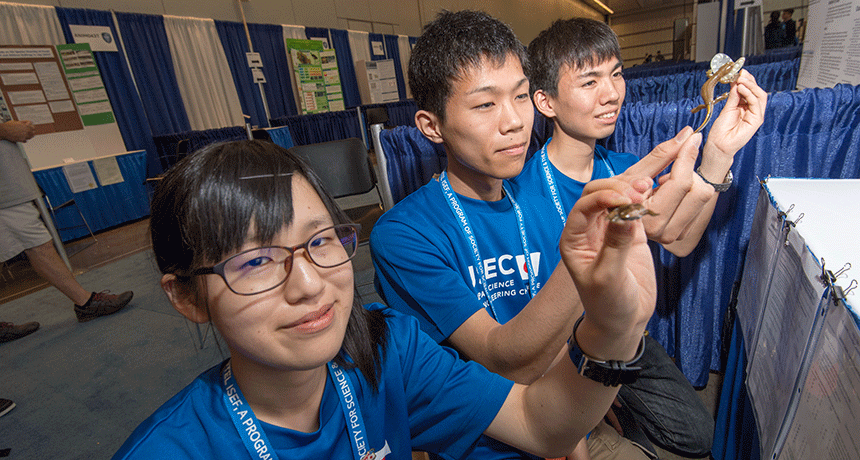
Hunting hidden salamanders with eDNA
The Japanese clouded salamander is an elusive beast. To find a new population, three teens turned to high-tech methods.
- Animals
‘Boot camp’ teaches rare animals how to go wild
Animals raised in captivity cannot safely re-enter the wilds without first understanding how to find food and avoid becoming a predator’s lunch. Scientists are helping some species learn this.
- Tech
New eyewear could help the visually impaired
Young inventors develop novel electronics to help people identify colors and navigate obstacles.