All Stories
- Brain
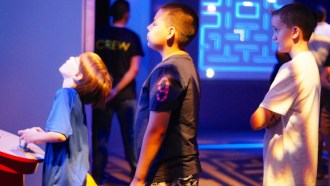
Video games can help some people read
People with dyslexia seem to get a boost from screen time.
- Animals
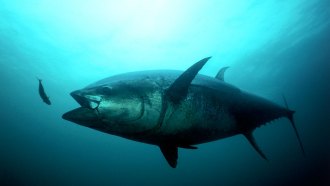
Sharks become science helpers
Jaws may scare beachgoers. But sharks bring a smile to some environmental scientists, who are using the toothy fishes to collect data on the ocean.
- Animals
Tag, you’re it!
Biologists now deploy a wide range of technologies to track animals. The data these experts collect reveal insights into the behavior of animals that spend much of their lives out of human eyeshot.
- Animals
Explainer: Tagging through history
What started as little metal bands have evolved into high-tech devices — some of which rely on satellites to share their findings.
-
Teachers and Parents: Science activities for the whole family
The annual American Association for the Advancement of Science meeting includes Family Science Days, where science outreach groups bring their best demonstrations to get students excited about science.
- Animals
Watch out for tree-climbing crocs
What’s that up in the tree? If you live in the right part of the world, it could be a hungry croc.
- Genetics
Where Native Americans come from
All tribes seem to derive from the same Asian roots, DNA indicates.
- Physics
Closing in on fusion energy
Scientists blasted a tiny capsule of hydrogen with laser beams, setting off a reaction that released more energy than in earlier experiments. Still, scientists remain a long way from creating a reaction that releases more energy than it needs to get started.
-
For Teachers: Designing a virtual energy future
The Museum of Science and Industry in Chicago takes energy education one step further with games and simulations to help students learn about how we power our lives.
- Microbes
Arctic thaw is spreading wildlife diseases
Polar animals are encountering new, killer parasites as melting ice unlocks their access to new hosts.
-
- Archaeology
Ancient footprints surface in Britain
There are hints they could have been made by ancestors of Neandertals.