All Stories
- Humans
Becoming human
Two new studies suggest that during ice ages, steep drops in temperature may have sent ancient species moving to more temperate, or mild, areas. As a result, these species would have been isolated from other populations.
- Tech
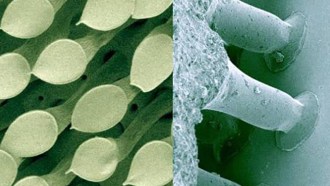
Cool Jobs: Like Mother Nature
Scientists observe what works best for animals, plants in efforts to build better products.
-
- Environment
Water’s worldwide travels
Scientists track the movement of ‘virtual water,’ used in the production of goods and exchanged among nations.
-
- Environment
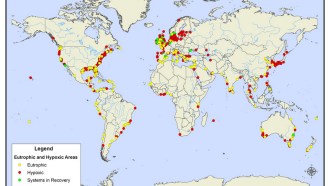
Suffocating waters
Coastal animals around the world are spending more time in or around waters with too little oxygen.
- Fossils
Dino drama
Scientists study skulls to determine whether Triceratops and Torosaurus were two different species.
-
- Earth
Twist and shake
A new look at the shape of the San Andreas Fault suggests future earthquakes may be stronger than previously thought.
- Fossils
Early toehold on land
A five-toed fossil now holds the record for smallest, oldest foot ever found.
- Plants
Ancient flower blooms again
Scientists have found the fruit of an ancient plant that had been frozen underground in Siberia — a region covering central and eastern Russia — for about 31,800 years. Using pieces of the fruit, the scientists grew plants in a lab. The new blooms have delicate white petals. They are also the oldest flowering plants that researchers have ever revived from a deep freeze.
-
Young scientists win big in Washington
2012 Intel Science Talent Search recognizes the nation’s top high school researchers.