In the heat, this Death Valley shrub air conditions its leaves
'Sweating' helps the plant stay up to 13 degrees C (23 degrees F) cooler than the surrounding air
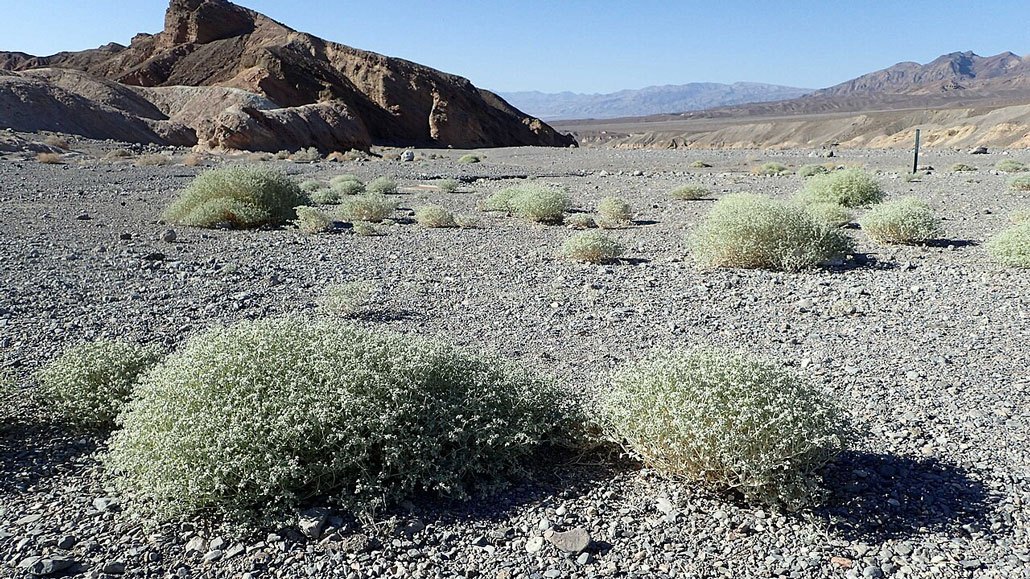
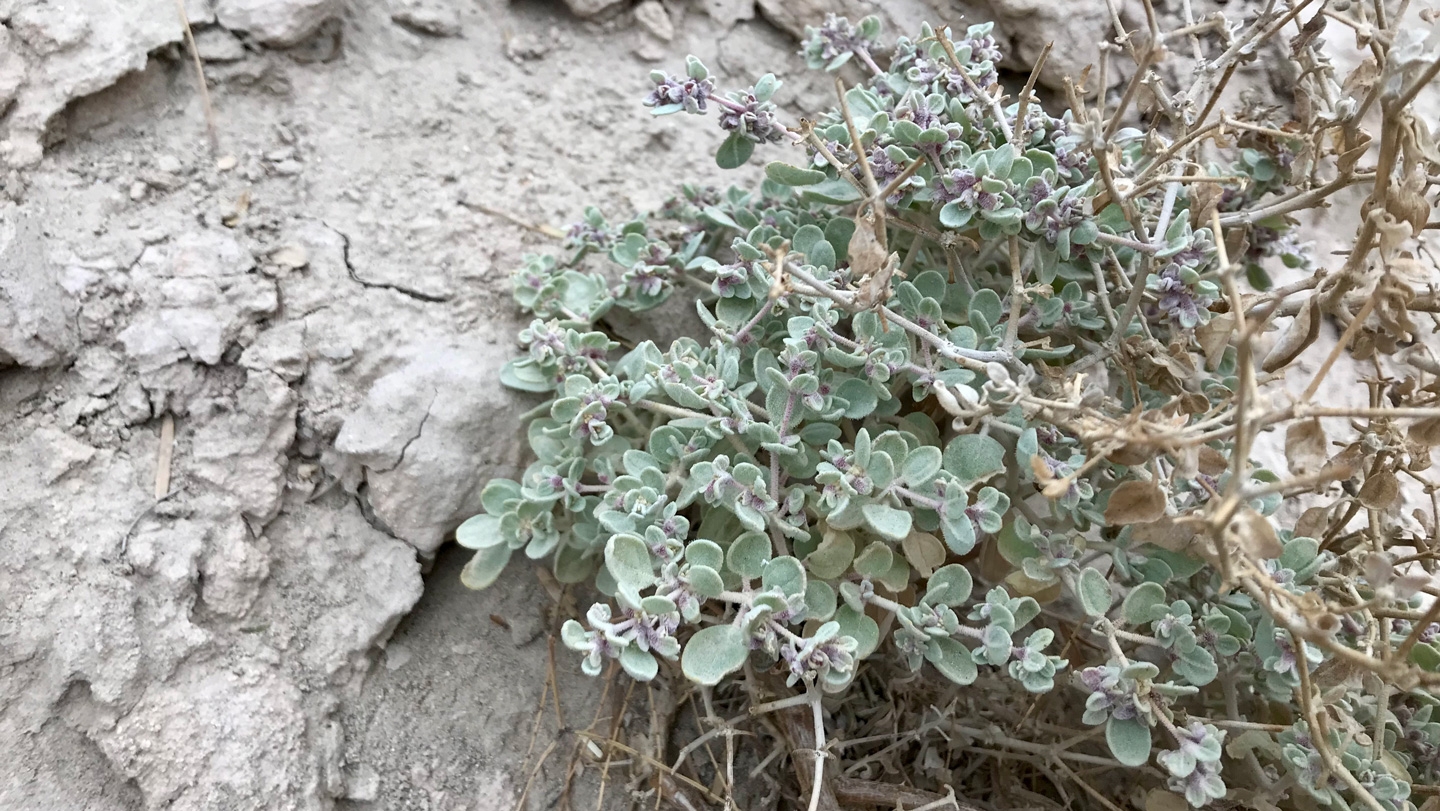
This honeysweet is a desert shrub that can withstand blisteringly hot weather for days on end. Living in Death Valley, it has to. Now scientists have found its survival secret: When the air gets very hot, this plant turns on evaporative cooling. Basically, it sweats.
Krzysztof Ziarnek, Kenraiz/Wikimedia Commons (CC BY-SA 4.0)
California’s Death Valley is one of the driest, hottest and harshest places on Earth. In summer, thermometers there often climb above 49° Celsius (120.2° Fahrenheit). Such extreme heat can make it hard for desert dwellers to survive. But one shrub has found a curious way not only to survive Death Valley, but also to thrive in its blistering heat.
The Arizona honeysweet essentially sweats.
“This plant has evolved a way to survive temperatures that would kill most other plants and animals,” says botanist Seung Yon Rhee. This plant scientist at Michigan State University (MSU), in East Lansing, worked on the new study. Even on scorching days, this plant grows fast. It can add about one-third to its weight every day.
This “in itself is an amazing biological phenomenon,” says Joanna Feehan. She’s another MSU plant biologist who worked on the study. The team shared its new findings August 3 in bioRxiv. Studies posted there have not yet been peer reviewed by other scientists.
In-leaf air conditioning?
The ability of the Arizona honeysweet (Tidestromia oblongifolia) to endure extreme heat has long fascinated scientists. It performs photosynthesis best at a blazing 47 °C (117 °F). That’s the highest peak-performance temperature for any plant, says Karine Prado, a plant biologist at MSU. “These plants wait [for] the hottest month just to grow fast,” she told Science News.
Prado and Rhee’s team showed last year that the plant can boost its photosynthesis in this blistering heat by changing the shape of chloroplasts in its leaf cells. These are the structures that convert carbon dioxide (CO2) into sugar. That sugar fuels the plant’s growth.
But to do that, its leaves have to keep from baking into a crisp. This year, Rhee says, her team set out to ask a simple question: “How can a plant survive in one of the hottest places on Earth?”
Scientists knew this honeysweet can cool itself by releasing water vapor. Vapor exits through stomata — tiny pores on its leaves and stems. Called transpiration, this process is like sweating, Feehan says. It was never clear, though, how big a role this method of cooling played in helping the plant survive Death Valley’s heat.
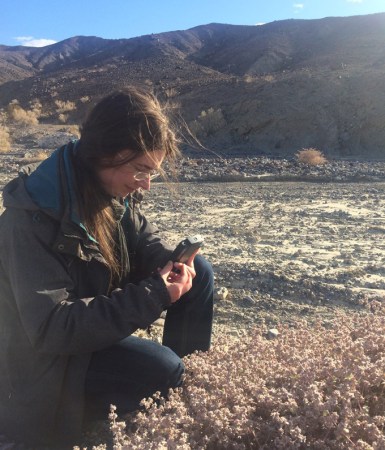
To find out, the MSU team collected seeds from 223 wild honeysweets growing in and near Death Valley. Then they grew more than 1,200 seedlings in the lab at a comfortable 30 °C (86 °F). Over several more days, the researchers gradually turned up the heat. They maxed out at 60 °C (140 °F) for six to eight hours daily. (Scientists believe that 60 °C is the hottest temperature at which complex life, such as plants or animals, can survive.)
At each step, the team measured how hot the plants got. Once the number of surviving and non-surviving plants did not change, the experiment ended.
Some plants survived repeated exposures to high temperatures. And they didn’t simply tolerate the heat. They actively cooled their leaves through transpiration. Some leaves were able to stay roughly 13 degrees C (23 degrees F) cooler than the surrounding air!
When the team experimentally closed the leaves’ stomata, shutting down this cooling, the plants didn’t live as long.
Clearly, Rhee concludes, “This cooling makes the difference between life and death.”
Do you have a science question? We can help!
Submit your question here, and we might answer it an upcoming issue of Science News Explores
Not all are equally heat tolerant
This is “direct evidence that leaf cooling contributes to survival under extreme heat,” says Wataru Yamori. He is a plant biologist at the University of Tokyo in Japan who did not take part in this work.
However, not all the honeysweets survived.
Some died after only a few days. Others remained healthy for weeks. These differences may trace to their DNA, Rhee suspects. It’s like “how some of us have brown eyes whereas others have blue eyes,” she says. Some of the plants, she explains, carry versions of genes that appear to more effectively help them cool off and survive extreme heat.
The new study did not pinpoint which genes bring better cooling relief, notes Rubén Rellán Álvarez. He studies plants at North Carolina State University in Raleigh and did not take part in the new study. Identifying those genes could help uncover “the secrets of this extreme adaptation,” he says.
That could have out-of-this world payoffs, says Rhee. To grow plants on the moon or Mars, she says “we’ll need to learn from the toughest plants on our own planet first.” The plants in Death Valley — where filmmakers have shot scenes set on desert planets in Star Wars and other movies — might just be the perfect teachers.
One limit in this study was water availability, Yamori says. The experiment was done without water restrictions. Opening the stomata can cool the leaf, but it also increases water loss. If stomata are closed, not only is the plant’s intake of carbon dioxide halted, but its cooling through transpiration is also turned off.
So the plant must balance cooling and CO2 intake as it conserves water, says Feehan. Further work, she says, will need to explore how it does this in nature.