All Stories
- Chemistry
Let’s learn about chocolate
Humans have been making chocolate for millennia. Now scientists are investigating how to make this tasty treat more abundant and nutritious.
- Earth
Scientists Say: Avulsion
As rivers seek out easier routes to the sea, path reroutes can transform our world. This is ‘avulsion’ refers to in geology. In medicine, the word can describe injuries.
- Tech
For teens, virtual reality worlds aren’t all fun and games
More than a third of surveyed teens who used VR headsets reported they had experienced hate speech, bullying or harassment in virtual reality environments.
- Physics
Eyelashes help fling water from our eyes
The “micro-ratchet” structure and curvature of eyelashes could help keep eyes clear of rain, sweat and tears.
- Space
Ancient black holes might solve the mystery of dark matter
Studies of gravitational waves, stars and other features of the universe could reveal whether such “primordial” black holes exist.
- Tech
Move over Iron Man, exoskeletons are getting real
Real-world wearable devices help people stay safe at work and accomplish everyday tasks.
- Chemistry
Behold the world’s thinnest pasta
Made from white flour and formic acid, the nanofibers average just 370 nanometers across. That’s two-hundredths the thickness of a human hair.
- Earth
Scientists Say: Lava bomb
An explosive volcanic eruption can shoot a blob of lava into the air. As that blob travels, it cools, creating a dangerous lava bomb.
- Space
Jane Rigby helped make the James Webb telescope a superstar
The senior project scientist for the JWST, Rigby believes being part of the LGBTQ+ community has made her a better astronomer.
- Brain
Scientists are exploring why some people don’t have a mind’s eye
A researcher with aphantasia is studying how different senses work together in the brain — and when they don’t.
- Animals
Meet some of the longest-lived animals
Think a 100-year-old person is old? Not compared to the world’s longest-lived animals — some of which have lifespans of thousands of years.
- Chemistry
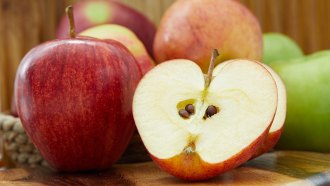
Experiment: How to keep fruit slices fresh
Let’s explore why fruit tends to brown over time and how to keep it looking fresh.