All Stories
- Science & Society
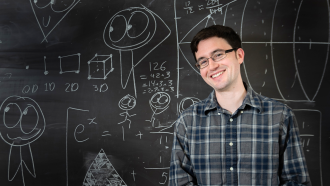
Viewing math as a language might help it make sense to more of us
It might also reduce the anxiety associated with using math, allowing people to better answer a host of important everyday questions.
- Earth
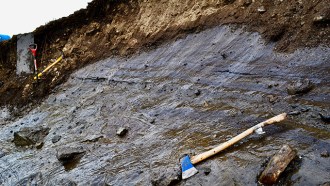
This long-buried glacier ice is at least 770,000 years old
Thanks to climate change, thawing permafrost in the Canadian Arctic has revealed this glacier remnant that could be more than a million years old.
- Planets
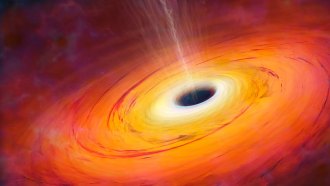
A distant crumbling planet spills its guts
Based on the light being emitted by its shed minerals, astronomers can for the first time determine the internal composition of an exoplanet.
- Animals
Tiger beetles weaponize sound to ward off bat predators
Some beetles make ultrasonic clicks that camouflage them as toxic tiger moths, warning hungry bats to stay away.
- Math
Scientists Say: Dimension
The simple concept of dimensions has inspired sci-fi creators to wrinkle time and launch into hyperspace.
- Animals
Analyze This: When do cats move like liquids?
Cats flow through narrow openings but hesitate before short openings. That may help them avoid unseen danger in the wild.
- Math
His love of math led to a career in quantum computing
James Whitfield began his career when quantum computing was still in its infancy. Today, he’s helping to make it more accessible to educators, researchers and others.
- Planets
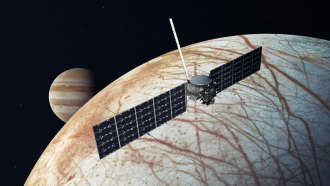
So many wondrous moons — just a spaceship ride away
Scientists are studying extraterrestrial moons for clues to how planets form, how life began — and whether there’s life out there right now.
- Materials Science
Experiment: How much water is needed to cook pasta?
In this cooking experiment, let’s find out if we can save time, energy and resources by boiling noodles in less water.
- Brain
Could the magic of memory manipulation ever become real?
Someday, technology might be able to help people better hold onto memories or forget bad ones.
- Genetics
This young biologist looked for links between diet and dyslexia
Thermo Fisher JIC finalist Giselle Drewett wanted to know how lifestyle might influence a gene related to dyslexia.
- Science & Society
Let’s learn about 10 Black scientists you should know
Meet 10 Black pioneers in human spaceflight, vaccine development and more.