Scientists Say
A weekly word defined, in a sentence and in context. Click here to find the alphabetized list.
- Health & Medicine
Scientists Say: Tonsils
The tonsils are pads of tissue in the throat that are part of the body’s immune system.
- Brain
Scientists Say: Haptic
Haptic is an adjective used to describe things related to our sense of touch.
- Chemistry
Scientists Say: Plasma
In physics, plasma refers to one of the four states of matter. In medicine, plasma describes the part of blood that ferries cells, nutrients and more throughout the body.
- Chemistry
Scientists Say: Aerosol
Aerosols are tiny bits of solids or drops of liquids suspended in gas. Aerosols include mist, fog and soot, as well as pollution from fossil fuels.
- Chemistry
Scientists Say: Oxidation and Reduction
Oxidation and reduction are two parts of a chemical process in which one atom steals electrons from another.
- Physics
Scientists Say: Mass
Mass shows how much an object resists speeding up or slowing down when force is applied — a measure of how much matter is in it.
- Brain
Scientists Say: Nicotine
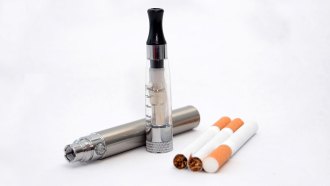
Nicotine is an addictive substance found in tobacco plants. It's what makes it so difficult to quit smoking or vaping.
- Physics
Scientists Say: Bond
In chemistry, this attachment between atoms forms because of the power of attraction. Chemical bonds make up every solid object on Earth.
- Plants
Scientists Say: Pollen
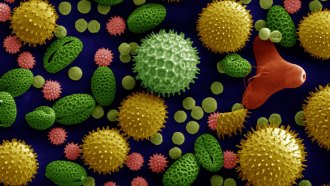
Pollen is a mass of tiny reproductive cells. These grains combine with egg cells to form seeds — but on the way, they can make some people miserable.
- Chemistry
Scientists Say: Metal
Metals are substances that can be elements, alloys or compounds. They all conduct heat and electricity and can be formed into different shapes.
- Animals
Scientists Say: Genus
A genus is a group of closely related species. It’s the first part of the two-part system called binomial nomenclature, used to name living things.
- Chemistry
Scientists Say: Alkaline
Alkaline chemicals are basic — substances that produce hydroxide ions in solution.