Scientists Say
A weekly word defined, in a sentence and in context. Click here to find the alphabetized list.
- Physics
Scientists Say: Piezoelectric
Piezoelectric materials produce an electric voltage when they are bent or squished. This can let us harvest electricity from movement.
- Health & Medicine
Scientists Say: Body Mass Index
This is someone’s weight in kilograms divided by the square of their height in meters. But it’s not a measure of someone’s health.
- Chemistry
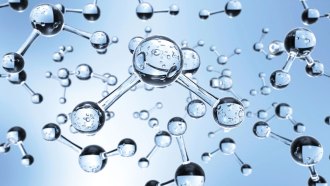
Scientists Say: Molecule
A molecule is a group of atoms linked with chemical bonds. It’s the smallest particle of a substance that has all of its chemical properties.
-
Scientists Say: Respiration
Breathe in and out, that’s respiration. Have a cell break down sugars for energy, and that’s respiration too.
- Math
Scientists Say: Algebra
Algebra is a type of mathematics that studies symbols and how they can be shifted around.
- Animals
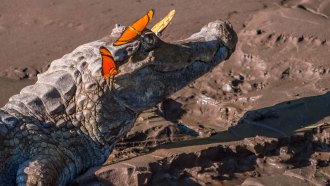
Scientists Say: Lachryphagy
Some insects land on the eyeballs of larger animals. They are seeking out the salt and proteins in the animal’s tears.
- Animals
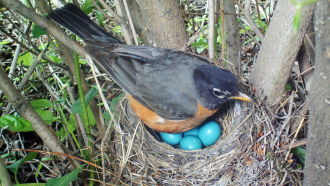
Scientists Say: Medullary bone
Medullary bone is a layer that forms inside bird and dinosaur bones. It’s a source of the calcium in eggshells.
- Math
Scientists Say: Velocity
Velocity is more than speed. It is both speed and the direction in which an object is traveling.
- Animals
Scientists Say: Apoptosis
When it’s time for cells to die, they need to do it carefully, so they don’t harm other cells.
- Brain
Scientists Say: Puberty
Puberty is a time when hormones surge and people develop the ability to have children. But it’s so much more than that.
- Animals
Scientists Say: Evolution
Evolution is how species change over time. Individuals in the group vary, and some will pass on their genes. Over time, the whole species changes.
- Brain
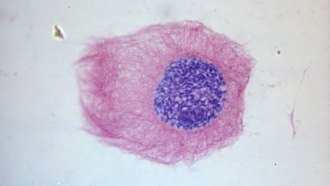
Scientists Say: Nucleus
Nucleus comes from the Latin term “nuc,” meaning nut or kernel. In science there are lots of nuclei. Every one of them is the center of something.