After every soak, fingers wrinkle — and always the same way
Their pruney pattern matches up with the blood vessels beneath them
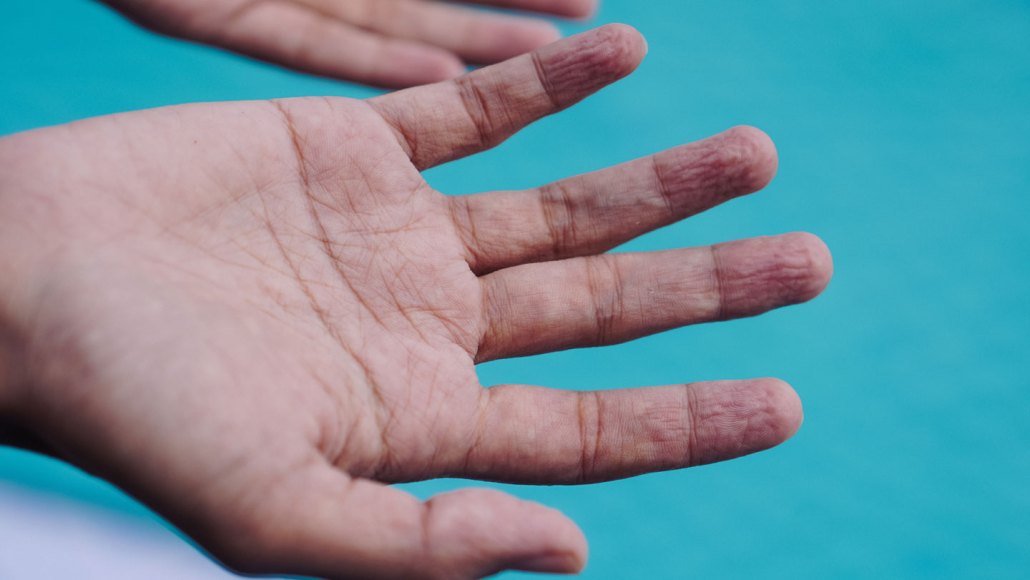
Fingers wrinkle when wet. A new study shows the wrinkly pattern is the same after every soak.
sellyhutapea/Getty Images
Summertime soaks in the pool often leave fingertips shriveled and pruney. Each time someone goes for a dip, their digits wrinkle in the precise same patterns, data now show. Those folds follow the paths of blood vessels below the skin’s surface (which generally stay in place).
Researchers shared the new finding in the May Journal of the Mechanical Behavior of Biomedical Materials.
Many people think that fingers and toes wrinkle when wet because the skin swells as it absorbs water. But around 20 years ago, researchers discovered that the puckering instead is due to blood-vessel constriction.
A prolonged soak leads to water entering the skin. Excess water dilutes the amount of salt in the tissue. This change sends a signal to the brain via nerves. The brain then instructs stationary blood vessels to narrow.
Their shrinking pulls in the anchored overlying skin of our fingers and toes. It’s an evolutionary tool that boosts grip strength under water by creating texture.
Do you have a science question? We can help!
Submit your question here, and we might answer it an upcoming issue of Science News Explores
Kid’s curiosity spurs investigation
Guy German is a biomedical engineer at Binghamton University in New York. He wrote about why water makes skin shrivel for a series in The Conversation where kids can ask questions and experts will answer. But follow-up questions from one reader stumped him. “Does it happen every time,” they asked. “And does it happen the same way?”
Recalls German, “I sat there, sitting with this [set of questions] going, ‘I really don’t know.’”
He and a graduate student then put these questions to the test.
They had three people submerge their right hands in water at 40 degrees Celsius (104 degrees Fahrenheit) for 30 minutes. Right after, the researchers snapped photos of each pruney finger pad. Participants repeated the process at least 24 hours later.
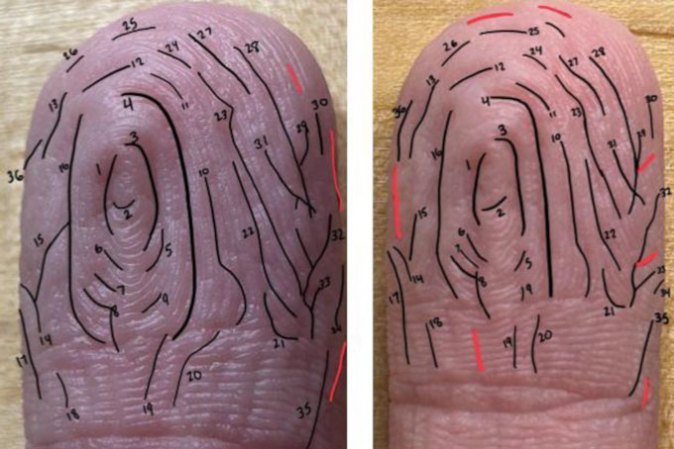
Images of the same finger one both days matched. They revealed pairs of wrinkles that shared similar locations and shapes. Mathematical analysis confirmed the wrinkles were nearly identical.
“Now the question that I would like to answer,” says German, “is does that happen on the length scale of, say, a year or 10 years or 50 years?” He’s not sure whether blood-vessel patterns shift with age. But fingerprints stay the same over a lifetime. If finger wrinkle patterns do too, they might someday help with biometric or forensic identification, he says.
“I do love the fact that the origin of this story came from just a simple, innocent question,” German says. “It opened up a huge door of what is essentially unknown science.”