Some Antarctic fish arrange their nests into odd shapes
These arrangements may help protect eggs from greedy predators
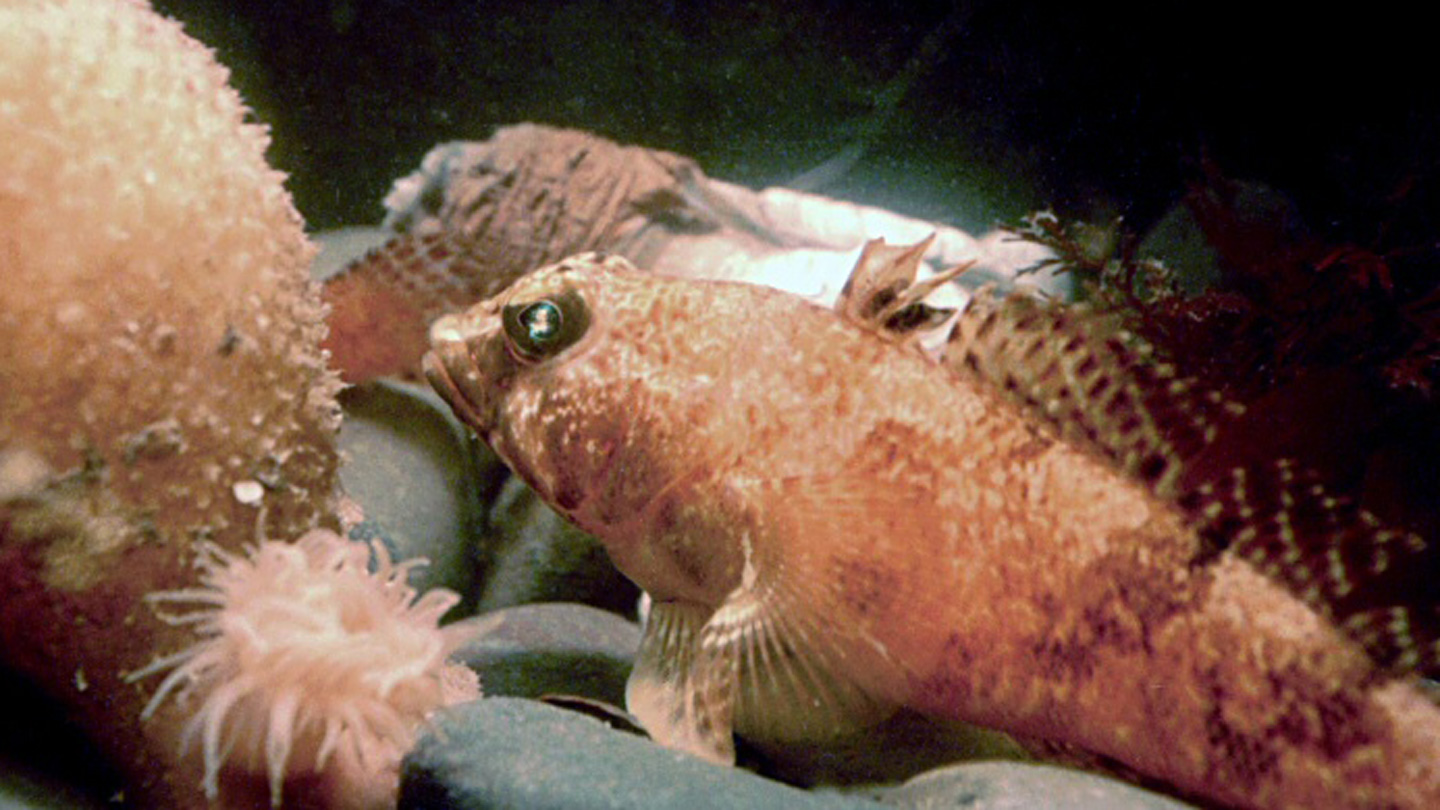
Yellowfin rockcod arrange their nests in organized shapes to protect against predators.
Eclipse/Weddell Sea Expedition 2019/Flotilla Foundation
Antarctic fish build surprisingly organized neighborhoods of nests — and in some very odd shapes.
Scientists spotted this aquatic architecture in the Weddell Sea. Those waters, off the coast of Antarctica, are some of the coldest on Earth. The discovery shows that fish there plan where they group their nests. This helps them protect their eggs from predators.
Researchers described the neatly arranged nests October 29 in Frontiers in Marine Science. The new findings add evidence that the Weddell Sea is home to complex ecosystems worth preserving.
Many countries want to use natural resources in the Antarctic, notes Thomas Desvignes. He’s a fish biologist at the University of Alabama at Birmingham who did not take part in the new work. An international treaty currently protects Antarctica’s resources. Still, some nations want to begin seabed mining or fishing in the Antarctic.
Such actions would put local wildlife at risk. The new research, Desvignes says, offers “one more reason why we should protect the Weddell Sea.”
A marine bio mystery
In 2019, researchers set out to explore a patch of open water near a sheet of ice called the Larsen Ice Shelf. Those waters had recently been exposed after a huge chunk of ice broke off from the shelf. The team dropped an underwater robot into the ocean to survey and film the seafloor more than 350 meters (about 1,150 feet) below.
After the journey, Russ Connelly looked through the videos hoping to find something interesting. A marine biologist, he works at the University of Essex in Colchester, England. The footage revealed bowl-shaped dimples pressed into the soft seafloor. As he looked closer, Connelly noticed those imprints formed perfect ovals and curves.
“We weren’t actually sure what the videos were showing us at the time,” Connelly recalls. “We thought maybe it was a Weddell seal snout that was going down and bonking down into the seabed. Or that it was pockmarks from stones dropping from the ice and making craters.”
But the marks seemed just too evenly spread out to be either of those.
The team then used its knowledge of creatures living nearby to figure out the true imprint artists. Those odd divots, they realized, must be fish nests made by yellowfin rockcod.
An underwater neighborhood
The videos turned up more than 1,000 yellowfin rockcod nests. They were arranged in five repeating patterns: clusters, crescents, U-shapes, lines and ovals. A few nests stood alone.
Most nests grouped into clusters, with several nests bunched closely. Connelly suspects this layout offers smaller fish better protection against predators. Larger fish that fend for themselves might live in those bigger, solo nests.
Other reasons may explain the nests’ odd ordering, too, Connelly says. It’s possible that many fish couples grouped their nests together for protection. But a single pair might have made the clustered ones. These fish might be building extra nests as decoys. More trips to the region are needed to confirm how many fish are using the nests, Connelly says.
These are hardly the only fish nests to have grabbed attention recently in the Weddell Sea. Almost four years ago, researchers discovered its Antarctic seafloor was home to the world’s largest known colony of breeding fish. This one community of icefish was nesting across a 92-square-mile area of the seabed.
“In general, we need to explore more of the oceans, because … we’re so surprised at every single time that we see life exists at these depths,” Connelly says. “We need to see what’s out there before species that we didn’t even know existed have been lost.”