Scientists Say: Superbloom
This wildflower ‘explosion’ happens when deserts have unusually rainy years
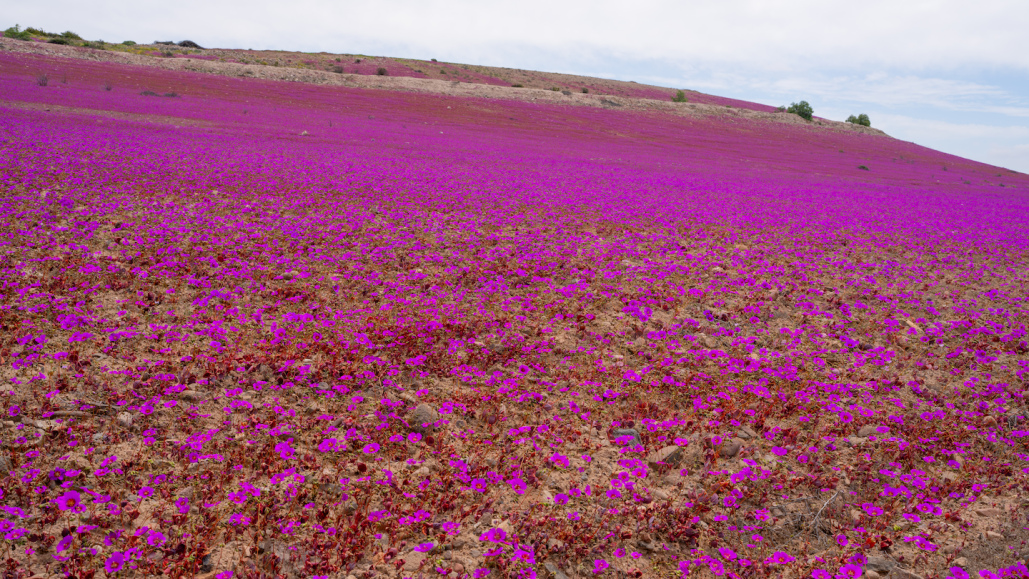
Chile’s Atacama Desert is the driest place on Earth outside the North or South poles. But unusually wet seasons can bring blooms like these purple Guanaco's Paw flowers to the usually barren landscape.
Oscar Gutierrez Zozulia/iStock/Getty Images Plus
Superbloom (noun, SOO-per-bloom)
Superblooms are massive blooms of desert wildflowers. There isn’t an exact number of flowers required to make something a superbloom. But the word usually describes an above-average number of blossoms. These flowers create colorful carpets that blanket usually barren desert landscapes. They can even be seen from space!
Deserts are dry ecosystems that get less than 25 centimeters (10 inches) of precipitation a year. As a result, these environments often have very little plant life.
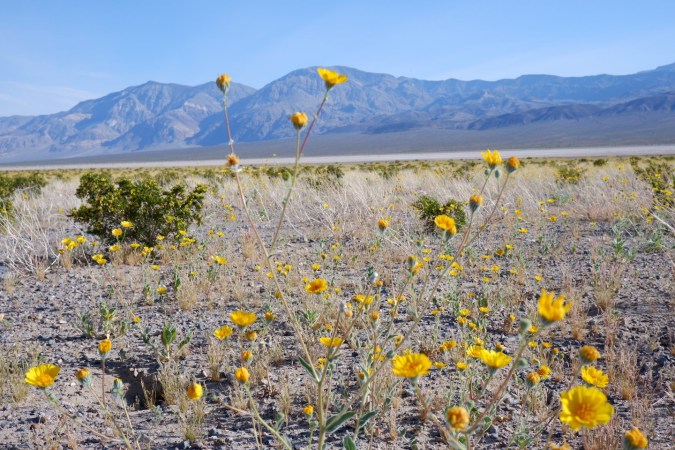
The few flowering plants that do grow in deserts live very short lives. They spring up after rainfalls and race through their life cycles in a few days or weeks before heat and drought wipe them out. Before they die, these plants produce lots of seeds. Those seeds can lie dormant in the soil for years or even decades, waiting for the right conditions to sprout.
This creates a buildup of seeds in the ground. So when deserts have an unusually wet year after many dry ones, the seeds sprout into a superbloom. This happens as long as it’s not too hot or windy for the flowers to grow.
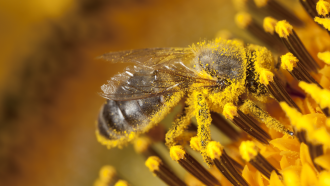
For animals that eat wildflowers, such as desert tortoises and sphinx moth caterpillars, superblooms are quite a feast. For humans, the blooms make a beautiful spectacle. But it’s important for visitors to not step on the blossoms or pluck them from the ground. That way, they can seed the next flower extravaganza.
In a sentence
Because of climate change bringing record-breaking droughts and heatwaves, superblooms could become even rarer.