Hawaii is turning fishnets and other plastic trash into roads
An island program is pulling pollution from the ocean and testing its use in pavement
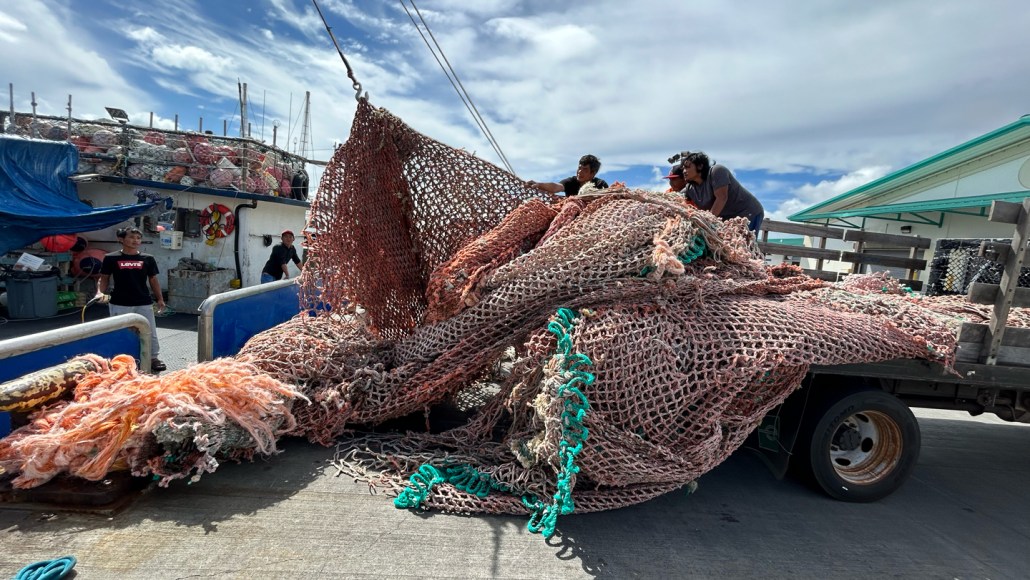
About 90 metric tons (roughly 200,000 pounds) of plastic has been hauled from the waters and beaches of Hawaii. That includes old fishing nets. Some of this waste has been turned into pellets and added to asphalt for paving some test sections of roads.
Courtesy of the Center for Marine Debris Research
This is a human-written story voiced by AI. Got feedback? Take our survey . (See our AI policy here .)
In Hawaii, ocean trash — including old fishing nets — is being recycled to cover roads. The process is experimental, but it shows promise as a way to deal with a growing pollutant: plastic.
Paving with plastic is being done elsewhere, such as Missouri and Texas. But Hawaii is the first state to try adding marine debris. Its islands currently face a unique exposure to trashed plastic. It comes from discarded fishing gear, but also tourist wastes. There’s even some plastic released from the Great Pacific Garbage Patch.
So far, people have pulled 90 metric tons (roughly 200,000 pounds) of plastic trash from the Pacific Ocean. More than one metric ton (2,200 pounds) of fishing nets alone have been used in paving Hawaiian roads.
One key question is whether the pavement’s wear and tear might shed microplastics — tiny bits of this embedded trash.
“We’re extremely concerned about the shedding of plastics or other chemicals into the environment,” says Jennifer Lynch. This can expose people and animals to toxic plastic additives. Lynch is a chemist. She heads the Center for Marine Debris Research at Hawaii Pacific University in Honolulu.
Her team shared its findings March 22 at the American Chemical Society (ACS) meeting in Atlanta, Ga.
Plastic for pavement
Lynch’s center runs a Nets-to-Roads program. Researchers collect and sort plastic and other marine debris gathered from beaches. Then they pick out waste made with polyethylene (Pah-lee-ETH-ih-leen). It’s a durable plastic found in such things as milk jugs, yogurt containers and fishing nets.
The Hawaii team sends the waste and nets to the U.S. mainland. There they get shredded and ground up. Then the materials come back to Hawaii. At a facility on the island of Oahu, they’re mixed with other ingredients to make asphalt. That’s the black, gooey stuff made from petroleum that’s often used to pave roads.
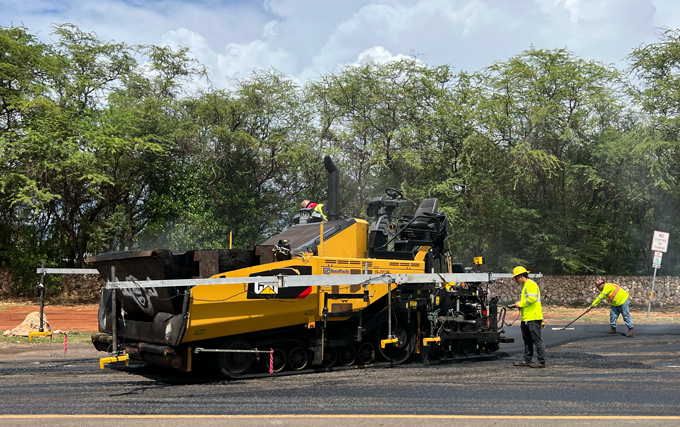
Once loaded onto trucks, this hot mix was used to cover stretches of road on the southwestern side of the island, Lynch says.
Three experimental strips went down in 2022. One had a section of traditional asphalt mixed with a rubber called styrene-butadiene-styrene. That rubber adds durability and flexibility. Ground marine waste and the rubber were added to a second batch. A third contained the marine waste and asphalt but no rubber.
Eleven months later, researchers collected road samples. They wanted to test it for escaping microplastics before taking the project to more roads, Lynch explains. They exposed the samples to conditions that mimic what might release microplastics. For example, they modeled stormwater running off a road or gravelly dust being swept from the road by traffic.
Water and dust from pavement with ocean trash contained amounts of microplastics similar to what was seen from samples of the asphalt with no plastic, says Jeremy Axworthy. He’s a marine biologist who worked on the program. He presented the team’s results at the ACS meeting.
Do you have a science question? We can help!
Submit your question here, and we might answer it an upcoming issue of Science News Explores
Road recipes
Phase two of this program launched in 2024. It tested five types of pavement, including combos with and without rubber and plastic. Some contained ground-up fishing nets. Others contained other plastic trash. Data on which performed best should be available soon.
Bill Buttlar directs the Mizzou Asphalt Pavement and Innovation Lab. It’s at the University of Missouri in Columbia. He’s impressed with the program. Still, he notes that Hawaii’s roads face different challenges than those on the U.S. mainland. Hawaii’s tropical climate brings heavy rains. And volcanic activity there causes the ground to constantly shift, which can crack roads. “The main challenge to scaling this is getting the recipe right,” Buttlar says. “What works in Hawaii may be a little different than what works in the [U.S.] Midwest.”