Uncategorized
-
- Animals
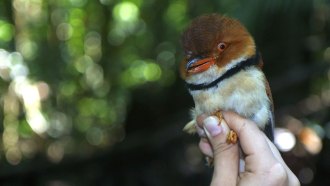
As the tropics warm, some birds are shrinking
Migratory birds are getting smaller as temperatures climb, studies had showed. New evidence shows dozens of tropical, nonmigratory species are, too.
- Animals
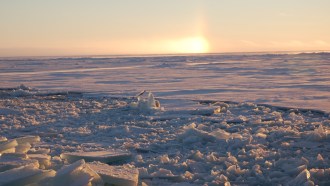
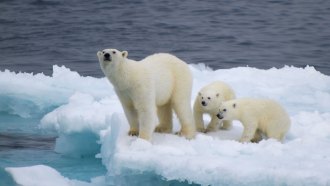
Can scientists develop an icy sanctuary for Arctic life?
The final refuge for summer sea ice may also protect the creatures that depend on it. Saving it is an ambitious goal with many hurdles.
- Animals
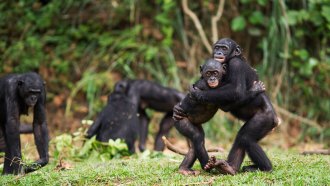
Let’s learn about chimpanzees and bonobos
Humankind’s closest cousins in the animal kingdom may look similar, but in terms of behavior, they’re polar opposites.
- Chemistry
This glitter gets its color from plants, not a synthetic plastic
In the new material, tiny arrangements of cellulose reflect light in specific ways to create vibrant hues in an environmentally friendly glitter.
- Animals
Scientists Say: Adaptation
This word refers to a feature of a living thing that helps it better survive in its environment — or the process of that feature evolving in a population.
- Animals
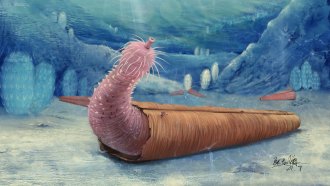
‘Penis worms’ could have been the original hermits
These soft-bodied critters lived in abandoned shells about 500 million years ago, a new study suggests.
- Earth
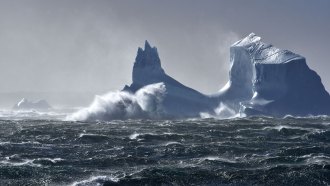
From icebergs to smoke, forecasting where dangers will drift
Smoke drifts. Fish eggs float downstream. Where such drifting things end up may seem a mystery. But research can predict where they’ll end up.
- Animals
A panda stands out at the zoo but blends in the wild
A panda may stand out among bamboo at the zoo, but in the wild, its black-and-white coloring camouflages it from predators. Learn more with this web comic.
- Humans
Snap! High-speed video captures the physics of snapping fingers
Inspired by the infamous snap of the Avengers rival Thanos, scientists set out to investigate the physics behind finger-snapping.
- Planets
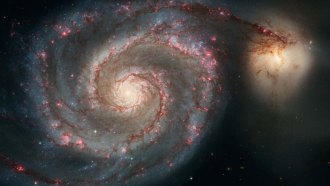
Astronomers may have found first known planet in another galaxy
The spiral-shaped Whirlpool galaxy may be home to the first planet spotted outside our own Milky Way galaxy.
- Chemistry
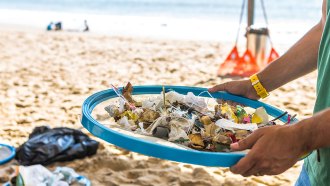
A new way to make plastics could keep them from littering the seas
Borrowing from genetics, scientists are creating plastics that will degrade. They can even choose how quickly these materials break down.