Uncategorized
- Environment
Wildfires can be tracked by their distinctive rumble
New sensors can map infrasound — a deep-bass thrumming lower than what human ears can hear — emitted by a fire as its flames spread.
- Health & Medicine
The sweet truth about carbohydrates
Many carbohydrates are important sources of energy, while others offer little benefit. Learn why not all carbs are the same and how our bodies use them.
- Chemistry
Not all that tastes sweet is sugary
We’re naturally drawn to sweet foods and drinks. Scientists have designed several ways to make things taste sweet with little or no sugar.
-
Introducing a new collection: Food for Thought
Explore the science of food, from the big three macronutrients — proteins, fats and carbohydrates — to vitamins, antioxidants and other micronutrients.
- Humans
Analyze This: Spooky feelings may come from noises too low to hear
People exposed to low infrasound frequencies had higher levels of a stress hormone in spit and were more likely to rate music as sad.
- Chemistry
Experiment: Make your own marshmallows!
Soft, sticky marshmallows can be made with just three ingredients. Finding the right ratio of sugar and corn syrup is key to making this sweet treat.
- Archaeology
Ancient Egyptian princesses may have been skilled warriors
A study of six mummies from ancient Egypt challenges the idea that the weapons buried with some royal women were merely ceremonial.
- Math
Scientists Say: Symmetry
From snowflakes to animal body plans, repeating patterns of shapes show up throughout nature.
- Animals
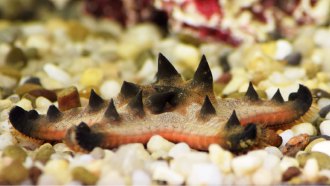
Some sea stars channel light like fiber-optic cables
The tiny cone-shaped structures in arms of chocolate-chip sea stars also triple their skeleton’s strength.
- Space
This cosmic oddity blurs the line between planet and moon
The object orbits a brown dwarf that orbits a star. Astronomers aren’t sure if it’s a planet, a moon — or something else entirely.
- Oceans
Meet the world’s biggest waves — and the mysteries behind them
These towering walls of water carry a lot of energy. Scientists are investigating what gives rise to such behemoths and their destructive power.
- Animals
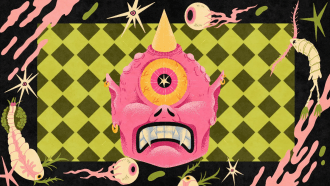
The Cyclops may be an ancient myth, but one-eyed creatures are real
The iconic Cyclops of The Odyssey might look like a massive, one-eyed person, but it might have more in common with creatures other than humans.