Uncategorized
- Physics
Distant galaxy seems filled with dark matter
If the Cosmic Seagull is a repository for dark matter, it will be the most distant galaxy to be filled with mysterious stuff.
- Climate
Climate change sets people on the move
As their homelands experience uncomfortable changes to weather, many people have begun migrating to places with a better climate.
- Chemistry
Scientists find an easier way to trap carbon dioxide in rock
Scientists have found a much faster and easier way to trap CO2 in minerals. If they can scale it up, it might one day help to slow climate change.
- Climate
Explainer: Where fossil fuels come from
Despite one oil company famously using an Apatosaurus as its logo, oil, gas and coal don’t come from dinosaurs. They do, however, come from a long time ago.
- Earth
Explainer: CO2 and other greenhouse gases
Carbon dioxide is just one of several chemicals that contribute to the greenhouse effect. Nitrous oxide, methane and CFCs are other big contributors.
- Climate
Analyze This: How hot will it get?
Temperatures are rising because of human-caused climate change. But some places will get hot faster than others.
- Ecosystems
New tools aim to better predict blooms of toxic algae
Scientists across the United States are developing programs that can predict when blooms of toxic algal may occur.
- Animals
Parasitic worms sicken people in the mainland United States
A worm native to Asia has sickened at least 12 people in eight continental U.S. states since 2011, a new report finds.
- Health & Medicine
Study links weight to when the school bell rings
Teens and preteens who started school earlier in the morning were slightly heavier than those who started later, in a large study of Canadian students.
- Chemistry
Scientists Say: Peptide
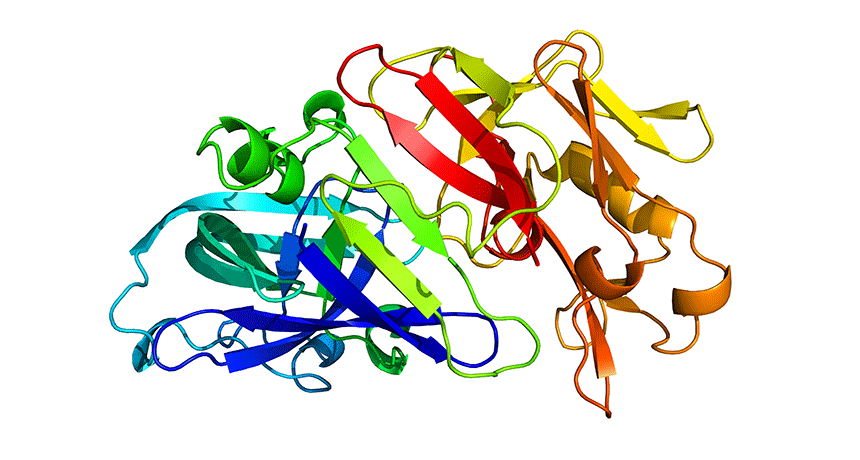
Peptides are short chains made of smaller molecules called amino acids. These chains can form proteins, and they can also do work on their own.
- Climate
Climate change intensified Hurricane Florence, study finds
A new study finds that a warmer climate fattened up Florence. The result: Once it made landfall it would now drop lots more rain and over a broader region.
- Earth
Air pollution is shortening lives worldwide
Worldwide, tiny particles of air pollution are making the average person’s life a year shorter.