Uncategorized
- Planets
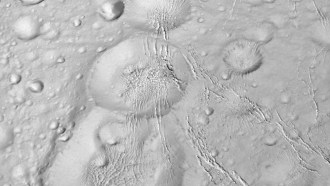
Saturn’s moon Enceladus wears a thick blanket of snow
Pits on the frosty moon reveal the snow’s surprising depth, up to 700 meters (2,300 feet) in some places.
- Materials Science
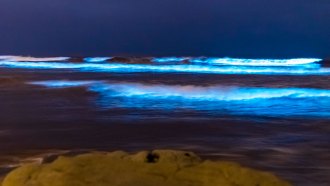
Analyze This: Algae behind blue-glowing waves light up a new device
Some algae glow blue when they experience forces. Held in transparent plastic, they now make devices light up in response to gentle pushes and tugs.
- Planets
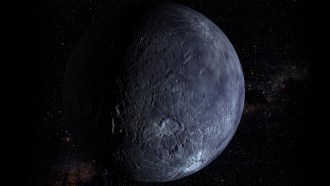
The dwarf planet Quaoar hosts an impossible ring
Quaoar’s ring lies outside the Roche limit. That’s an imaginary line beyond which rings aren’t thought to be stable.
- Computing
Scientists Say: Code
Writing code allows people to tell computers and other smart devices what to do.
- Physics
In a breakthrough experiment, fusion gave off more energy than it used
The sun creates energy through nuclear fusion. Now scientists have too. This achievement raises hopes for developing a new type of clean energy.
- Archaeology
Carvings on Australia’s boab trees reveal a people’s lost history
Archaeologists and an Aboriginal family are working together to find and document a First Nations group’s lost ties to the land.
- Microbes
Bacteria give some cheeses their distinct flavors
Linking types of bacteria to specific flavors could help cheesemakers tweak their products — or even develop new cheese flavor.
- Materials Science
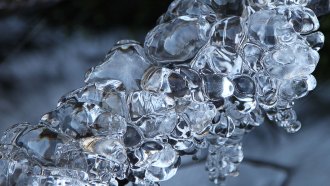
Let’s learn about the weird science of ice
Better understanding of ice could lead to new deicing materials or even, someday, weather control.
- Animals
How can Baby Yoda be 50 years old?
Animals with wings, big bodies or other protections from predators are more likely to evolve long lifespans.
- Chemistry
Scientists Say: Rubisco
Rubisco is a key protein in the process of photosynthesis, which feeds plants — and, in turn, us.
- Animals
A love of small mammals drives this scientist
Alexis Mychajliw’s science is driven by her love of animals. She now looks to tar pits and fossilized poop to understand ancient ecosystems.
- Archaeology
American democracy arrived long before Columbus did
Indigenous peoples of the Americas developed self-rule long before the pilgrims arrived or the U.S. Constitution was written.