Cuddling helps apes keep the peace
Chimpanzees and bonobos might use friendly touches to keep conflict at bay
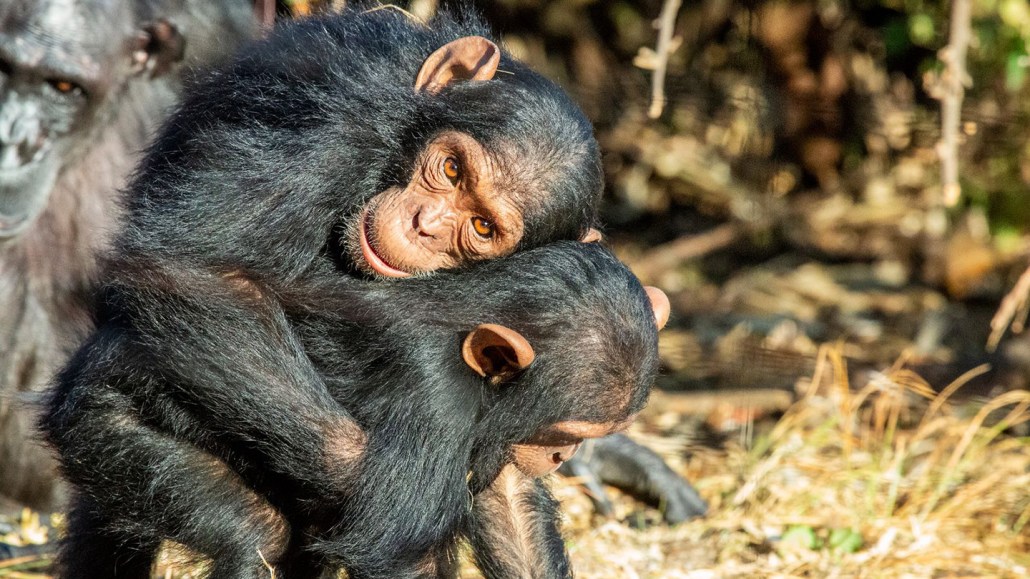
Little Jake and Little Joey embrace in a protected forested area in Zambia. Hugs like these could help these apes strengthen social bonds before stressful situations.
Jake Brooker/Chimfunshi Wildlife Orphanage Trust
Hugs and kisses could help primates keep the peace. A new study shows that chimps and bonobos might use friendly physical touch to calm each other in stressful situations.
Chimpanzees and bonobos are part of a group of large tailless primates known as apes. They share embraces, pats and genital touches with their neighbors. They even hold hands and stick their fingers in each other’s mouths! Such buddy-buddy behaviors form the social glue that helps groups stick together, says Zanna Clay. A primate researcher, she works at Durham University in England.
Humans could learn a lesson about this love language from our ape relatives, she says. Physical touch might calm us and connect us more before intense moments. This could be useful for people attending sporting events or competitions. “Physical closeness is a really powerful way of managing stress,” Clay says.
Her team shared its findings on July 22 in Proceedings of the Royal Society B.
Hugging it out
Scientists knew chimps and bonobos use physical touch to solve conflicts. But Clay’s team noticed that the apes were also getting friendly in the absence of fighting, says Jake Brooker. He studies primates at Utrecht University in the Netherlands. Brooker wondered if the apes were using cuddles to head off conflicts, not just resolve them.
To answer this question, he, Clay and their co-workers observed five different groups of chimps or bonobos. These animals live in protected areas in Zambia and the Democratic Republic of Congo.
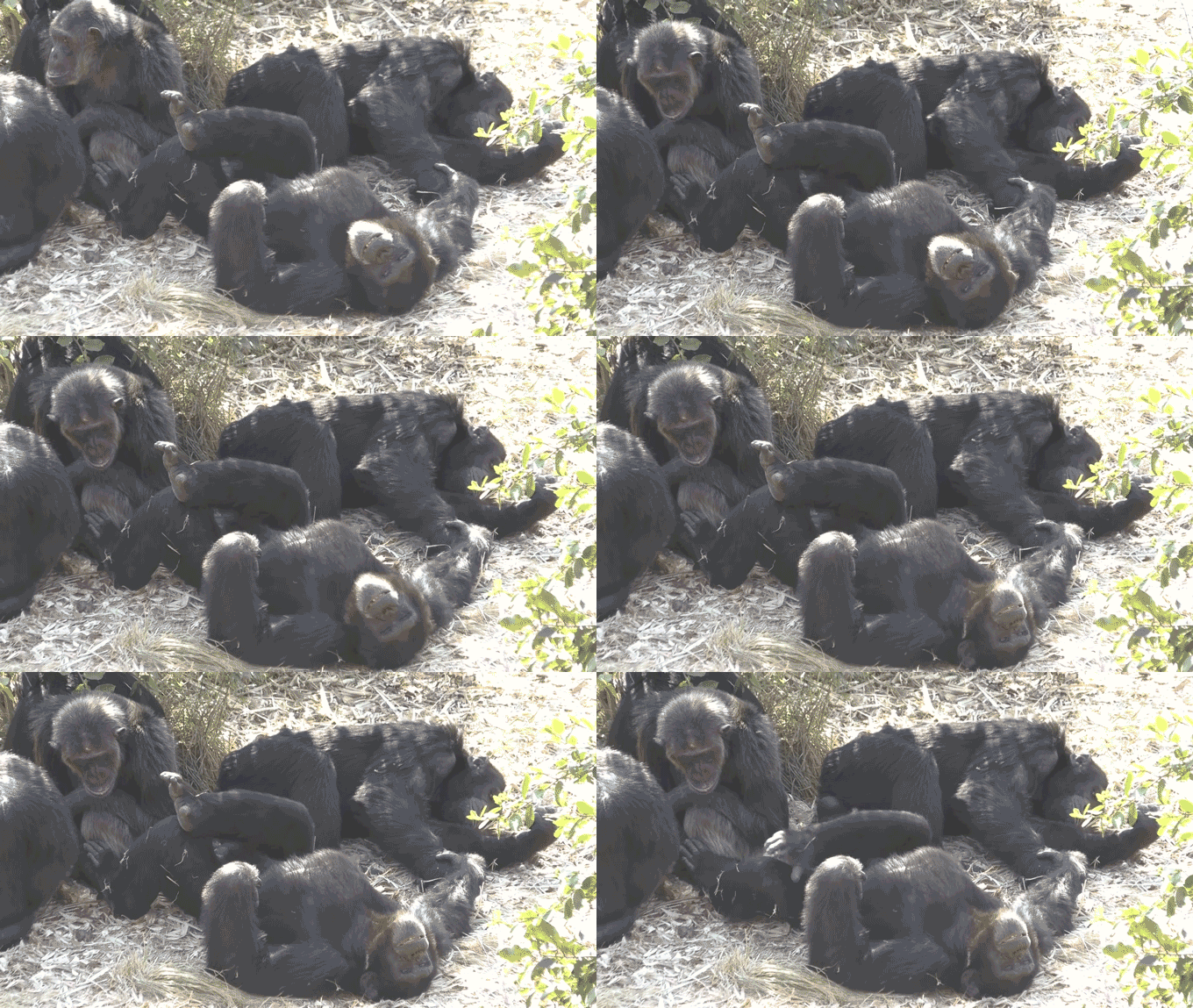
The scientists offered the animals peanuts, a favorite snack. When the apes saw the treats coming, they’d get nervous and excited, Brooker says. That’s because they could see there weren’t enough peanuts for everyone to eat their fill. The scientists filmed the animals before, during and after offering peanuts.
The more the animals cuddled before feeding, the more likely they were to eat together in peace, they found. This was true for both bonobos and chimps.
Chimps often get a bad rap, Clay says; they’re known for being surly and aggressive. Bonobos, on the other hand, are considered the ape world’s free-loving hippies. But the team’s results suggest these species may be more similar than people think.
Clay can’t say for sure if touchy-feely behaviors help apes get along. Maybe more tolerant groups just tend to touch each other more. In fact, she says, it’s probably a two-way street.
Do you have a science question? We can help!
Submit your question here, and we might answer it an upcoming issue of Science News Explores