
Janet Raloff
Editor, Digital, Science News Explores
Editor Janet Raloff has been a part of the Science News Media Group for more than four decades. While a staff writer at Science News, she covered the environment, toxicology, energy, science policy, agriculture and nutrition. She was among the first to give national visibility to such issues as electromagnetic pulse weaponry and hormone-mimicking pollutants, and was the first anywhere to report on the widespread tainting of streams and groundwater sources with pharmaceuticals. Her writing has won awards from the National Association of Science Writers, International Free Press Association and the Institute of Food Technologists. Over the years, Janet has been an occasional commentator on NPR's "Living on Earth" and her work has appeared in several dozen publications. She is also a founding board member of the Society of Environmental Journalists. In July 2007, while still writing for Science News, Janet took over Science News Explores (then known as Science News for Kids) as a part-time responsibility. Eventually, she expanded the magazine's depth, breadth and publication cycle. In 2013 it became her full-time job (although she still writes the occasional story for Science News). Before joining Science News, Janet was managing editor of Energy Research Reports (outside Boston), a staff writer at Chemistry (an American Chemical Society magazine) and a writer/editor for Chicago's Adler Planetarium. Initially an astronomy major, she earned undergraduate and graduate degrees from the Medill School of Journalism at Northwestern University (with an elective major in physics). She interned with the Office of Cancer Communications (NIH), Argonne National Laboratory, the Atomic Energy Commission (now Energy Department), the Oak Ridger in Tennessee and the Rock Hill Evening Herald in South Carolina.
All Stories by Janet Raloff
-
EnvironmentExplainer: All crude oil is not alike
Crude oil comes in conventional and unconventional types.
-
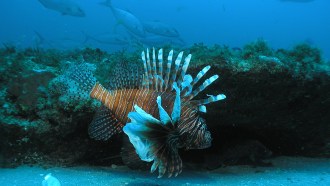
AnimalsGorgeous eco-bullies
‘Foreign’ lionfish — aquarium castoffs — have been invading American coastal waters at an alarming rate and gobbling up the natives.
-
BrainSleepyheads prefer junk food
A night without sleep changes the brain and how appetizing people find high-calorie foods.
-
-
-
Health & MedicineFat becomes a disease
Medical group decides it is time for doctors to view — and treat — obesity as a disease.
-
-
Health & MedicineKiller-flu update
Infection that recently developed in China shows signs of being easy to spread and hard to kill.
-
ClimateMajor twister hits Oklahoma
Its speed, which largely determines the damage it causes, is still unknown.
-
-
Health & MedicineDeadly new virus emerges
A mysterious infection has been spreading for almost a year.
-
EcosystemsPredators as climate helpers
In lakes and streams, fish and insects can help protect aquatic plants that gobble up greenhouse gas.