Questions for ‘Analyze This: Some bats feast on songbirds midflight’
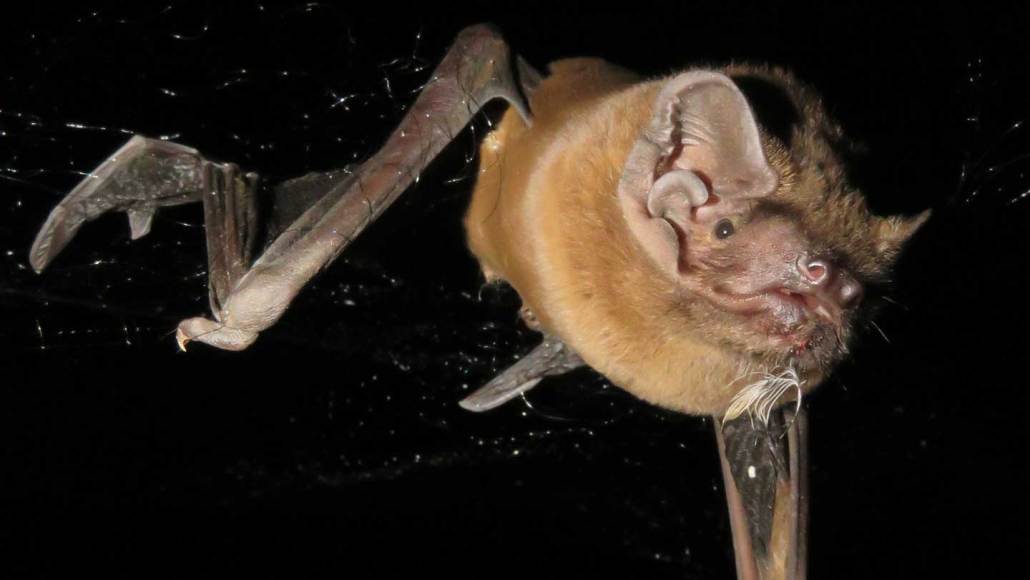
A bat with light brown fur clings to fine threads, its wings partially open and face clearly visible against a black background. A feather is visible against the bats chin.

A greater noctule bat is caught in a mist net with a passerine feather and blood in its mouth.

Jorge Sereno

To accompany “Analyze This: Some bats feast on songbirds midflight

SCIENCE

Before Reading:

  1. What is the difference between a sound’s “pitch” and its “volume”? Give one example of a scenario in which you might encounter a low-pitch, high-volume sound.
  2. Describe two types of diet that you associate with bats.

During Reading:

  1. What evidence suggests that some bats eat songbirds?
  2. What are the common and scientific names for Europe’s largest bat?
  3. What problem did the biologgers solve for scientists? List two sensors on the biologgers that describe what measurements they can make.
  4. What types of sounds did scientists hear from the microphone recordings?
  5. How many logged hunting events were recorded?
  6. Explain why the prey didn’t fly away from the incoming predatory bats.
  7. How many birds in the study escaped capture?
  8. Describe some features of the bat’s typical process in consuming a bird.

After Reading:

  1. What is the range of altitudes shown on the graph? How does that compare to the height of migrating songbirds?
  2. How does the bat’s altitude change as it searches for prey? How does it change as it attacks its prey? Why might this be?
  3. What other types of measurements could offer more insight into how bats eat birds midflight? How would you graph those data?