Questions for ‘Human-built ‘beaver’ dams help save struggling streams’
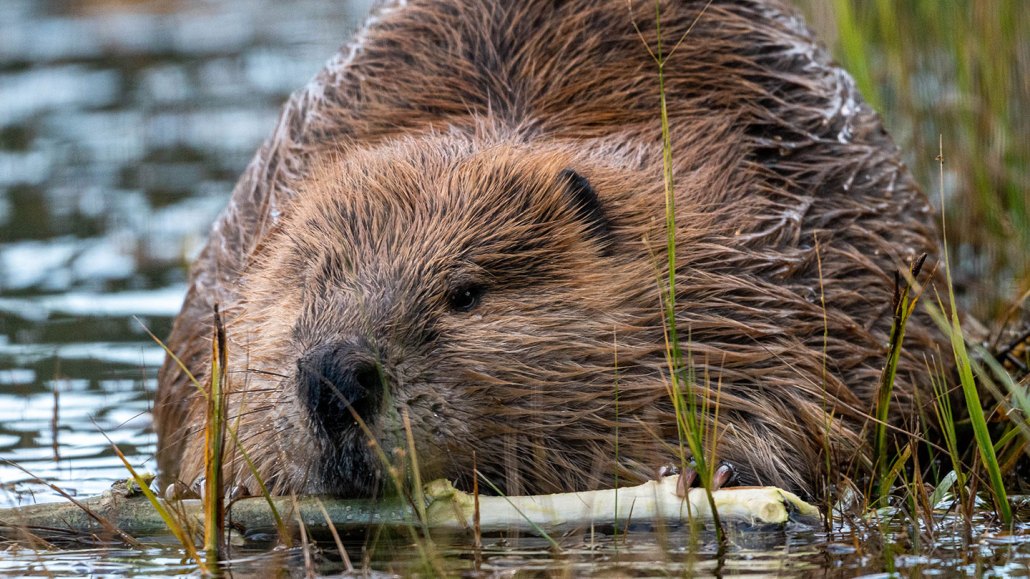
Beavers were abundant in North America before the arrival of European settlers. Due to the fur trade, populations plummeted. They’re now on the rise.
National Park Service
Share this:
- Share via email (Opens in new window) Email
- Share on Facebook (Opens in new window) Facebook
- Share on X (Opens in new window) X
- Share on Pinterest (Opens in new window) Pinterest
- Share on Reddit (Opens in new window) Reddit
- Share to Google Classroom (Opens in new window) Google Classroom
- Print (Opens in new window) Print
To accompany ‘Human-built ‘beaver’ dams help save struggling streams’
SCIENCE
Before Reading:
- What is an ecosystem? To the best of your knowledge, what is the difference between an ecosystem and a habitat?
- Imagine you’re talking to someone who has never seen a beaver. First, describe what the animal looks like, then briefly explain one role a beaver plays in its ecosystem. For instance, you might consider how beavers affect other species in their habitat. Or, how might beavers influence non-biological aspects of an ecosystem, such as water or soil?
During Reading:
- Describe two actions the Beaver Brigade might take to support beavers in Bernheim Forest.
- What does BDA stand for?
- What was one major reason for the decline in beaver populations in the 1800s?
- Describe one similarity between the life cycles of steelhead trout and salmon.
- What is a smolt?
- What challenge did Michael Pollock identify at Bridge Creek for beavers trying to build dams?
- Why did Pollock’s team choose willows as a building material for their BDA?
- List at least three changes Pollock noted at the site of the BDA when he returned the following year.
- Why might BDA building projects meet pushback from local residents? In other words, what complaints might people have about building BDAs in their local area?
- What are cysts? What question were researchers trying to answer by testing stream water for the presence of cysts near BDAs?
After Reading:
- A bayou is a marshy biome that typically lies between saltwater and freshwater. For example, a bayou might occur where a river empties into an ocean. Bayous often provide safety for juvenile (young) fish. Do a quick internet search to learn about bayous. Give one example of a bayou. Identify one similarity between a bayou-type biome and a biome shaped by the influence of beavers. Then, research and describe one threat faced by some bayous today. To what extent might the approaches used by the research teams in this story help a bayou? Explain your answer.
- This story points out misconceptions people may have about stream ecosystems, such as thinking of them as neat, orderly channels that don’t flood. Imagine someone describes a stream to you in this way. Write out a response to correct their misconception. Point to information in this story to support your answer.