HS-ESS3-6
Use a computational representation to illustrate the relationships among Earth systems and how those relationships are being modified due to human activity.
- Environment
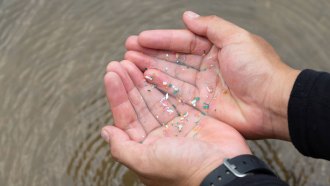
Sea life may suffer as plastic bits alter metals in water
This interplay between plastics and metals could affect how each affects the environment — and suggests opportunities for controlling their risks.
- Climate
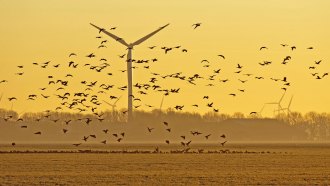
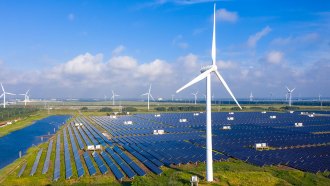
Here’s how to increase clean energy without harming wildlife
Wind farms, solar panels and more take up land and may harm wildlife. Researchers are working to resolve this conflict.
- Climate
The world is aiming for ‘net zero’ emissions of greenhouse gases
Nations are charting how they might ‘zero’ out their releases of climate-warming gases. Success might greatly lower the risks of climate catastrophes.
- Climate
Green energy is cheaper than fossil fuels, a new study finds
Switching over to clean, renewable power — and away from fossil fuels — could save trillions of dollars by 2050, a new study finds.
- Climate
Explainer: What is decarbonization?
Lowering carbon levels in our atmosphere to stabilize the climate may start with switching from fossil fuels to greener energy sources.
- Chemistry
Explainer: All about carbon dioxide
Animals and other life on Earth exhale carbon dioxide, which plants use for photosynthesis. But too much of this gas can perturb Earth’s climate.
- Environment
Microplastic pollution aids viruses and prolongs their infectivity
The tiny plastic bits give these germs safe havens. That protection seems to increase as the plastic ages and breaks into ever smaller pieces.
- Climate
Greenland’s inland ice is melting far faster than anyone thought
Inland melting of the Northeast Greenland Ice Stream is accelerating — and may contribute far more to sea level rise than earlier estimates suggested.
- Animals
Study finds big drop in animal populations since 1970
But the same thing is not happening throughout the kingdom. For instance, more than half of vertebrate populations are stable or increasing.
- Environment
This chemist uses online videos to teach about the perils of microplastics
Imari Walker says her journey as a scientist and science communicator lets her talk about and advocate for her passion.
- Environment
Bacterial ‘living wires’ could help protect the seas and climate
Long, thin bacteria that conduct electricity may be able to help clean up oil spills and reduce emissions of methane, a powerful greenhouse gas.
- Humans
Eight billion people now live on Earth — a new record
The global population hit this milestone on November 15, according to an estimate from the United Nations.