HS-LS1-2
Develop and use a model to illustrate the hierarchical organization of interacting systems that provide specific functions within multicellular organisms.
- Microbes
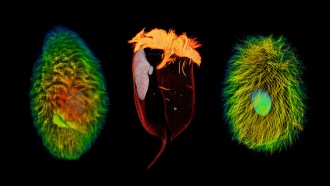
Fuzzy microbes may fuel cows’ methane burps
Production of this potent greenhouse gas is triggered by a newfound feature of these microbes — one with a funny name: hydrogenobody.
- Animals
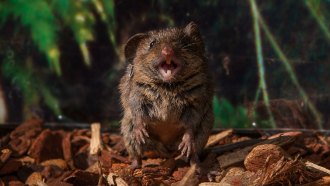
Here’s how ‘singing’ mice belt out their tiny tunes
Balloon-like air sacs in the mice's throats create whistling songs. No other animal is known to make calls in this way.
- Brain
VR can train the human brain to treat wings like real limbs
Virtual "flying" coaching, based on bird flight, took only a week. Afterward, participants’ brains seemed to view VR wings almost like true limbs.
- Animals
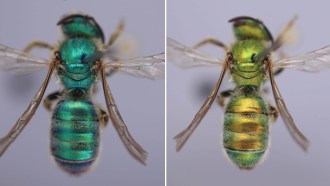
Like living mood rings, these bees change color when it turns humid
Humidity makes North American sweat bees change color. This trait could be widespread among shiny insects, some biologists now suspect.
- Brain
Imagination is not just replaying what we’ve seen and heard
New brain scans are helping sort out how our brains process imagined thoughts versus real sensations.
- Brain
Scientists Say: Synesthesia
This is a trait in which one kind of sensory input, such as sound, can trigger another sense, such as sight.
- Humans
Some people use echolocation to get around. Here’s how it works
As expert echolocators make multiple clicking sounds, their brains process the echoes to help them perceive their surroundings.
- Health & Medicine
Positive thinking could help boost your immune system
With real-time feedback, people can learn to turn on a part of the brain that helps rev up the immune system, new data show.
- Life
Scientists Say: Spore
Patience is a virtue of these crafty, resilient little reproductive cells. Some bacterial spores have grown after lying dormant for a millennium.
- Animals
Physics explains how snakes climb and stand without limbs
Tree snakes can raise their body into the air without falling over. They keep their balance by bending their bodies close to their base.
- Health & Medicine
How pitchers rest between innings could save their arms — and stats
Focusing on muscle recovery during games could help keep pitch speeds high and injury risk low, one ISEF finalist finds.
- Tech
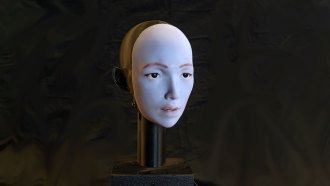
Would lip-synching make androids seem less creepy?
Robots that seem almost — but not quite — human can strike us as eerie. Improved lip motions might help overcome this “Uncanny Valley” effect.