MS-ESS1-4
Construct a scientific explanation based on evidence from rock strata for how the geologic time scale is used to organize Earth's 4.6-billion-year-old history.
- Fossils
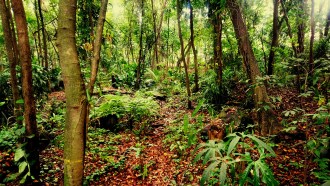
Dinosaur-killing asteroid radically changed Earth’s tropical forests
The asteroid collision initially reduced the diversity in what had been sunny tropical rainforests. In time, the forests would become permanently darker.
- Chemistry
Extreme pressure? Diamonds can take it
Diamond retains its structure even at extreme pressures, which could reveal how carbon behaves in the cores of some exoplanets.
- Physics
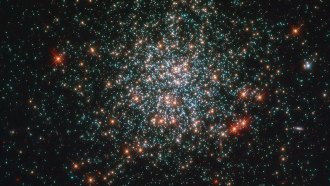
Explainer: Stars and their families
Most pinpoints that light the night sky are raging infernos we call stars. As adults, many will create new elements that they later cast off into the cosmos.
- Physics
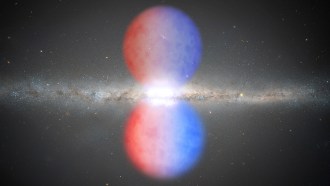
Spotted: Milky Way’s giant gas bubbles in visible light
The bubbles have different colors, based on how the gas inside them moves. That could give clues to how the bubbles developed.
- Climate
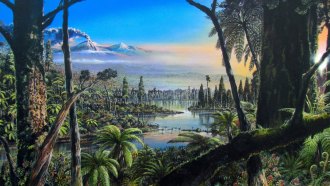
A rainforest once grew near the South Pole
A forest flourished within 1,000 kilometers of the South Pole. That was a while ago, as in millions of years ago.
- Space
Black hole mega-burp was truly explosive
Long, long ago, in a galaxy far, far away, a black hole blasted out 100 billion times as much energy as our sun ever will. One word for that: Wow!
- Climate
Study appears to rule out volcanic burps as causing dino die-offs
New data on when massive volcanic eruptions happened do not match when the dinosaur mass extinction took place.
- Physics
Dust-shrouded monster is a snapshot from the early universe
Scientists have spotted a massive galaxy from the early universe shrouded in dust. It turned up in a small survey by the ALMA radio telescopes in Chile.
- Earth
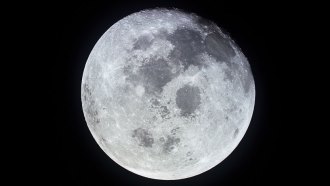
How Earth got its moon
How did our moon form? Scientists are still debating the answer. It may be the result of some one big impact with Earth — or perhaps many small ones.
- Earth
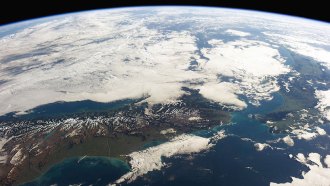
Is Zealandia a continent?
Geologists are making the case for a new continent, that they would dub Zealandia. It can be found largely submerged beneath the southwestern Pacific Ocean.
- Chemistry
Oxygen-rich air emerged super early, new data show
Scientists had thought animals were slow to emerge because they would have needed oxygen-rich air to breathe. A new study finds that plentiful oxygen may have developed early. So animals may have been late on the scene for another reason.
- Earth
Cool Jobs: Mapping the unknown
Scientists find different ways of exploring places humans will never visit — and drawing maps to help us better understand such mysterious places.