MS-ESS3-3
Apply scientific principles to design a method for monitoring and minimizing a human impact on the environment.
- Earth
Canada’s Crawford Lake seems to mark when the Anthropocene began
Mud at the bottom of this lake holds a record showing how humanity has been changing our planet. But the Anthropocene isn’t an official new epoch yet.
- Tech
New thermal ‘cloak’ keeps spaces from getting too hot or too cold
A prototype fabric could help keep cars, buildings and other spaces cooler during heat waves while also reducing greenhouse-gas emissions.
- Materials Science
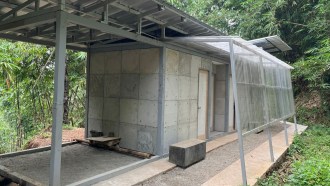
This house is partly made of recycled diapers
After being washed, dried, sanitized and shredded, used diapers were mixed with other materials to make a strong concrete.
- Climate
For greener toilets and air conditioning, consider saltwater
Using saltwater would allow coastal cities to save their freshwater for drinking and to reduce their carbon footprints. Some could save money, too.
- Environment
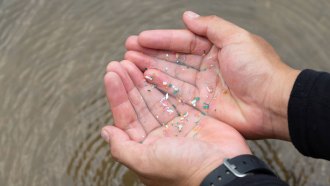
Fungi help rescue crops being harmed by microplastics
Microplastics in the soil hinder plant growth. But two finalists at Regeneron ISEF found that fungi and farm waste can reduce the harm.
- Environment
Making yards more diverse can reap big environmental benefits
Replacing grass with native plants uses less water and fewer chemicals while providing additional benefits to people and wildlife.
- Chemistry
Scientists Say: PFAS
Non-stick coatings, stain-resistant cloth and other common materials leach long-lived PFAS into soil and water.
- Tech
A new solar-powered gel purifies water in a flash
The unusual, fruit-inspired structure of this material provides quick filtration that could satisfy people's daily water needs.
- Chemistry
Chemists have unlocked the secrets of long-lasting Roman concrete
By searching ancient texts and ruins, scientists found a concrete recipe that could make buildings stronger — and help address climate change.
- Environment
Sea life may suffer as plastic bits alter metals in water
This interplay between plastics and metals could affect how each affects the environment — and suggests opportunities for controlling their risks.
- Climate
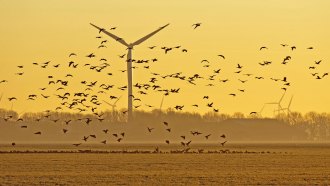
Here’s how to increase clean energy without harming wildlife
Wind farms, solar panels and more take up land and may harm wildlife. Researchers are working to resolve this conflict.
- Agriculture
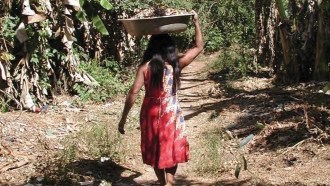
Native Amazonians make rich soils — and ancient people may have too
Modern Amazonians make nutrient-rich soil from ash, food scraps and burns. The soil strongly resembles ancient “dark earth” found in the region.