MS-ETS1-3
Analyze data from tests to determine similarities and differences among several design solutions to identify the best characteristics of each that can be combined into a new solution to better meet the criteria for success.
- Environment
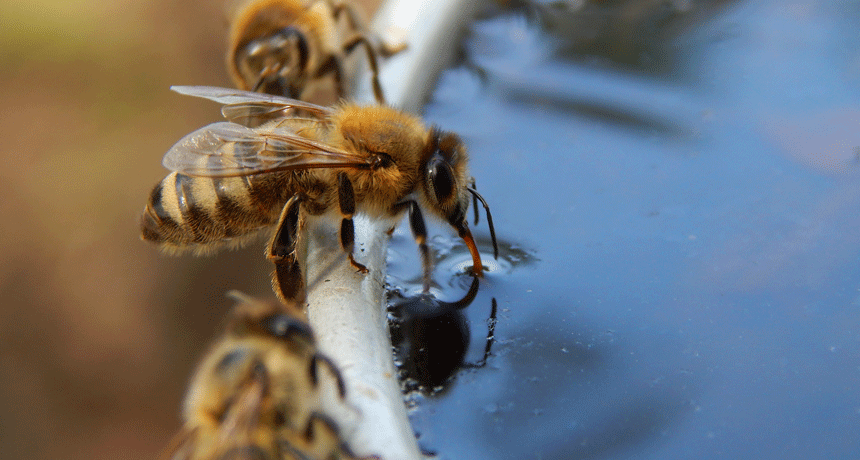
Cleaning up water that bees like to drink
Plant roots suck up pesticides used on soils, then release them into water that can seep from their leaves. This is a sweetened water that bees love to sip. A teen figured out how to remove most of the pesticide with bits of charcoal.
- Physics
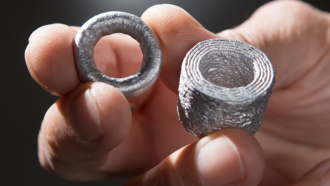
Father and son harness magnetic fields for new type of 3-D printing
A dad and his son have developed a new 3-D printing method in their basement. It harnesses pulsed magnetic fields to build metal objects one tiny aluminum drop at a time.
- Animals
Cool Jobs: A world aglow
Three scientists probe how the natural world makes light, in hopes of using this information to design new and better products.
- Computing
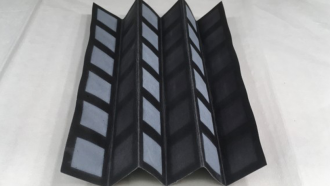
Germs power new paper batteries
New paper-based batteries rely on bacteria to generate electricity. These ‘papertronic’ power systems may be a safer choice for remote sites or dangerous environments.
- Animals
Cool Jobs: Abuzz for bees
These scientists are keeping bees healthy, making medicines for people from honey and constructing bee-inspired robots.
- Computing
How to build computer chips only 3 atoms thick
Scientists have engineered an ultrathin material only three atoms thick. The material could be used to make extremely slender computer chips.
- Computing
Star Trek technology becomes more science than fiction
On Star Trek, the characters used devices that seemed wild, futuristic and impossible. But those sci-fi gadgets are inspiring real-world, useful inventions.
-
How not to grin and bear it
Three teen researchers who took part in this year’s Broadcom MASTERS competition seek to help those who clench and grind their teeth.
- Chemistry
Milking chocolate for its health benefits
Researchers figure out how to give milk chocolate the same health benefits as dark chocolate. The secret ingredient is an extract from peanut skin.
- Agriculture
Teen develops water-saving pods for seeds
In California’s drought, every drop of water counts. A teen developed a capsule to keep sprouting seeds wet and reduce water use.
-
Teen prints a device to help keep wounds dry
A Broadcom MASTERS finalist invented a sensor that goes off when a wound is too wet. This would alert a patient it’s time to change their bandage.
-
Teen studies better cleaning through chemistry
Why do we use hot water and soap to get things clean? To find out, a teen invented a way to measure surface tension.