Animals
- Animals
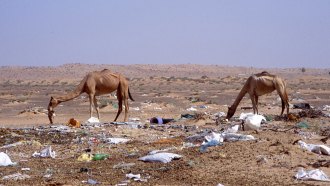
Camels have been dying after mistaking plastic for food
Plastic waste has been building up in the guts of some camels. It may now be killing off one percent of them in the United Arab Emirates each year.
- Animals
Africa’s poisonous rats are surprisingly social
Scientists confirm that the African crested rat can safely cover itself in poison and also find that the rodents may live in pairs — or even family groups.
- Animals
Touching allows octopuses to pre-taste their food
Special sensory cells in their arms’ suckers sense chemicals. Those cells allow them to taste the difference between food and poison.
- Animals
Utah mink is first known case of the coronavirus in a wild animal
A wild mink appears to have picked up the novel coronavirus from farmed animals. Such spread in the wild does not appear common.
- Animals
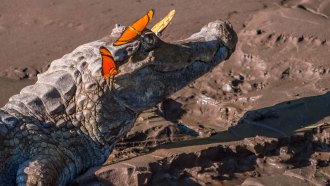
Scientists Say: Lachryphagy
Some insects land on the eyeballs of larger animals. They are seeking out the salt and proteins in the animal’s tears.
- Animals
Let’s learn about sharks
This ancient group of fish can use scent and even electricity to detect their prey. And they fill an important niche in the ocean.
- Animals
Scientists Say: Medullary bone
Medullary bone is a layer that forms inside bird and dinosaur bones. It’s a source of the calcium in eggshells.
- Animals
Around the world, birds are in crisis
Human activities around the world are threatening bird species. Numbers of even some of the most common species are starting to fall.
- Animals
Ogre-faced spiders listen closely to snatch bugs from the air
Ogre-faced spiders can hear prey sneaking around behind them. Low frequencies can trigger a blind, backwards attack.
- Animals
Scientists Say: Apoptosis
When it’s time for cells to die, they need to do it carefully, so they don’t harm other cells.
- Animals
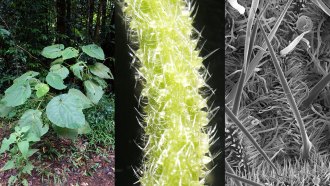
Please do not touch the Australian stinging tree
Stinging-tree leaves look soft and inviting, but one touch delivers agony. Structurally, the plant's painful chemical looks a lot like spider venom.
- Animals
The diabolical ironclad beetle is nearly unsquishable
The diabolical ironclad beetle is an incredibly tough little creature. A peek inside its exoskeleton reveals what makes it virtually uncrushable.