Animals
- Animals
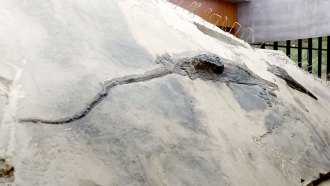
This ancient reptile’s last meal may have truly been a killer
An ichthyosaur’s eyes were too big for its stomach. And that may have led to this ancient reptile’s death.
- Animals
See what these animal mummies are keeping under wraps
A new method of 3-D scanning mummified animals reveals life and death details of a snake, a bird and a cat that lived in ancient Egypt.
- Animals
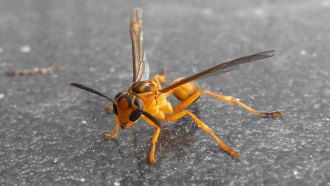
A wasp nibbled a baby bird for breakfast
Scientists found an injured baby bird in a nest they were studying. The culprit wasn’t another bird or a reptile. It was a wasp.
- Animals
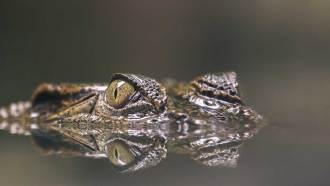
Let’s learn about alligators and crocodiles
Alligators and crocodiles seem similar — but they live in different places and look different, too.
- Animals
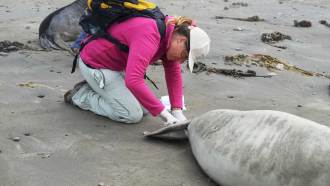
One tiny sea parasite survives 200 times atmospheric pressure
Known as the seal louse, this tiny insect can survive deep oceanic dives on its mobile home, a marine mammal.
- Animals
Whale blowholes don’t keep out seawater
Whales’ blowholes aren’t as protective as scientists had thought. They not only can let in water but also pollutants.
- Animals
Scientists Say: Amphibian
Amphibians are ectotherms that live dual lives — they start off in water, breathing with gills, and end up breathing air with lungs.
- Animals
Quacks and toots help young honeybee queens avoid deadly duels
It’s not just ducks that quack. Honey bees do it too. They also toot. Researchers eavesdropped on hives to find out why.
- Animals
A single chemical may draw lonely locusts into a hungry swarm
Swarms of locusts can destroy crops. Scientists have discovered a chemical that might make locusts come together in huge hungry swarms.
- Animals
Some beetles can be eaten by a frog, then walk out the other end
After being eaten by a frog, some water beetles can scurry through the digestive tract and emerge on the other side — alive and well.
- Animals
Are coyotes moving into your neighborhood?
How do coyotes survive in New York City, Los Angeles and Chicago? Researchers and citizen scientists are working together to find answers.
- Animals
Here’s the summer science you might have missed
From sizzling Siberia and ‘smart’ toilets, to new uses for astronaut pee, more than COVID-19 made news this summer.