Animals
- Animals
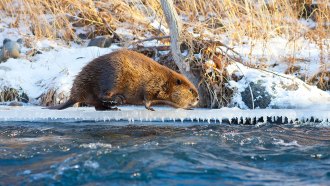
Busy beavers may be speeding thaw of Arctic permafrost
As climate change continues, busy beavers are expanding their range in Alaska. Their dams could further speed the loss of permafrost there and promote local warming.
- Animals
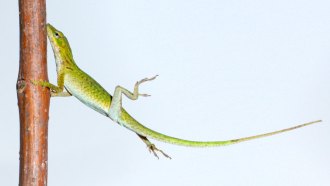
Analyze This: Hurricanes may help lizards evolve better grips
Lizards have larger toepads in areas that tend to have higher hurricane activity. This suggests high winds select for those that can hang tight.
- Animals
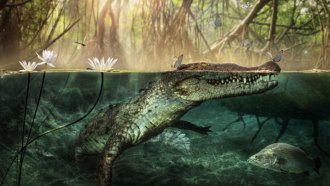
American crocs seem to descend from kin that crossed the Atlantic
A fossil hints that early crocodiles crossed over from Africa, millions of years ago, to colonize a new land.
- Animals
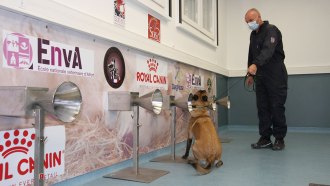
Viral scents? Dogs sniff out coronavirus in human sweat
Researchers train dogs to sniff out COVID-19. In the United Arab Emirates, sniffer dogs have already begun identifying infected passengers at airports.
- Animals
To figure out your dog’s ‘real’ age, you’ll need a calculator
What’s your dog’s human-equivalent age? Just multiply how old it is times seven, right? Uh, no. And here’s why.
- Animals
Superblack fish can disappear in the deep sea’s darkness
Some fish that live in the ocean’s depths are superblack due to a special layer of light-absorbing structures in their skin.
- Animals
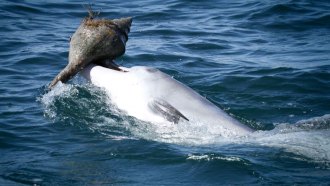
Dolphins can learn from their peers how to use shells as tools
Some bottlenose dolphins seem to look to their peers, rather than mom, to learn how to trap prey in shells.
- Animals
Flying snakes wriggle their way through the air
Flying snakes go tens of meters (yards) without wings. They do it by undulating back and forth and up and down, a new study shows.
- Animals
What you need to know about ‘murder hornets’
Two new specimens of the world’s largest hornet have just turned up in the United States. Here’s what to make of them and other alien-hornet invaders.
- Animals
Pooping ducks can shed the live eggs of fish
Some carp eggs survived and even hatched after being pooped by a duck. This may help explain how invasive fish reach isolated waterways.
- Animals
Tube-dwelling sea creatures may be oldest known parasites
A fossil bed of clam-like animals from a half-billion years ago is covered in tube-dwelling organisms. These suggest the tube dwellers were parasites, scientists now report.
- Animals
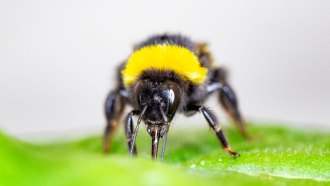
Bumblebees may bite leaves to spur plant blooming
In a pollen shortage, some bees nick holes in tomato leaves. This can speed up flowering and pollen production by weeks.