Chemistry
- Archaeology
Let’s learn about radiocarbon dating
Through the power of radioactivity, carbon dating can reveal the age of many fossils and artifacts.
- Brain
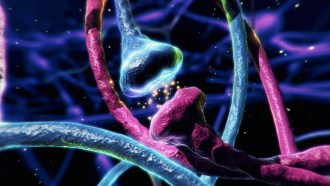
Scientists Say: Dopamine
This brain chemical helps focus our attention and plan our path toward success.
- Chemistry
Teen chemist uncovers potentially harmful preservatives in pet food
Thermo Fisher JIC finalist Mackensey Wilson measured levels of a chemical called BHT in three pet food brands.
- Chemistry
Scientists Say: Rocket propellants
Rockets need more than fuel to get where they need to go — they also need oxidizers to burn that fuel. Together, these chemical combos are known as rocket propellants.
- Chemistry
Experiment: What makes ice melt fastest?
During the winter, you might have seen trucks spreading a mix of salt and sand on the roads to de-ice them. But how does that work? Let’s investigate.
- Health & Medicine
Why you shouldn’t just brush off dandruff
Research points to certain yeast and bacteria as culprits behind some dandruff. Special shampoos or prescription cleansers can help.
- Health & Medicine
Science works to demystify hair and help it behave
Research explores new ways to classify hair — from loose curls to tight coils — along with ways to control it and improve its looks and health.
- Plants
Explainer: How a seed grows into a plant
Plants use carbon from the air to make food and build shoots, roots and more. They adapt and respond to their environments in many incredible ways.
- Tech
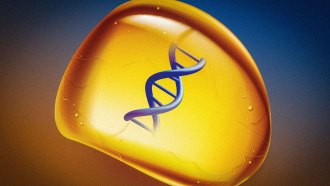
A Jurassic Park-inspired method can safely store data in DNA
DNA can store all types of data. An amber-like material can now protect its information long-term — or release it on demand for short-term use.
- Chemistry
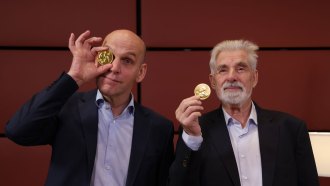
Predicting and designing protein structures wins a 2024 Nobel Prize
A biochemist and two computer scientists using AI shared the top award in chemistry.
- Science & Society
Let’s learn about the Nobel Prize
Nobel Prizes are the highest honors in science. But the prizes are far from perfect measures of scientific impact.
- Chemistry
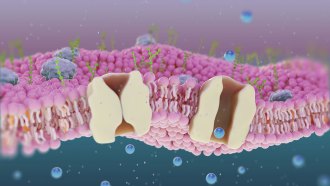
Explainer: How cells use chemistry to make the electricity of life
Charged particles, or ions, constantly move in and out of cells. These migrations produce tiny electric currents, which power your brain, heart and more.