Life
- Plants
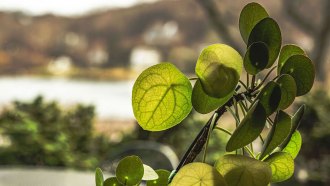
A geometric pattern lurks in Chinese money plant leaves
Tiny water-oozing pores appear to shape the leaves’ veins into a “Voronoi diagram.”
- Microbes
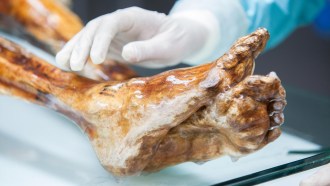
Dormant microbes from Ötzi the Iceman’s body can grow in the lab
These cold-loving yeasts may be thousands of years old. They also suggest the mummy’s remains may not be completely frozen in time.
- Animals
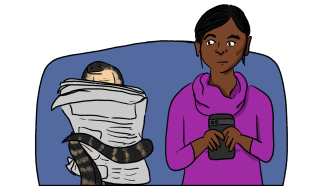
King cobras may be riding trains across India [COMIC]
The snakes may be tempted onboard by tasty rodents — but train rides can carry cobras far from their forest habitats.
- Animals
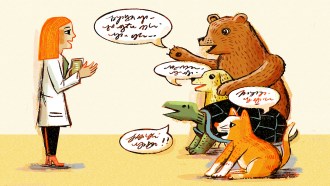
Chatty cats and talking dogs could one day ‘speak’ in our language
Scientists are making advances in decoding animal sounds. That might someday make animal translators a possibility.
- Microbes
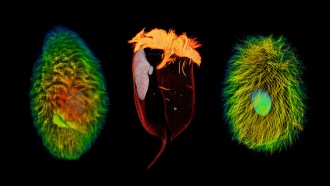
Fuzzy microbes may fuel cows’ methane burps
Production of this potent greenhouse gas is triggered by a newfound feature of these microbes — one with a funny name: hydrogenobody.
- Animals
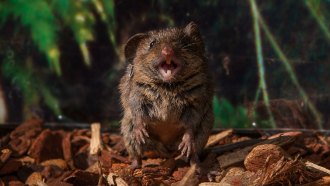
Here’s how ‘singing’ mice belt out their tiny tunes
Balloon-like air sacs in the mice's throats create whistling songs. No other animal is known to make calls in this way.
- Brain
VR can train the human brain to treat wings like real limbs
Virtual "flying" coaching, based on bird flight, took only a week. Afterward, participants’ brains seemed to view VR wings almost like true limbs.
- Agriculture
Scientists Say: Corn Sweat
Cornfields release moisture into the air — or “sweat” — a couple of ways. One is evaporation. The other is transpiration.
- Animals
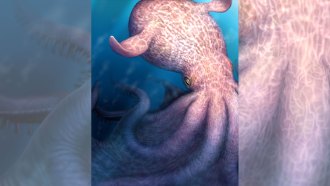
Giant school bus–sized octopuses may have once ruled the oceans
Some of these predators were as long as whales. Roaming the seas more than 72 million years ago, the octopuses appear to have been the largest invertebrates ever known.
- Animals
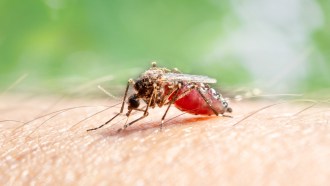
Mosquitoes may learn to like DEET, a common insect repellent
In lab tests, mosquitoes exposed to DEET while feeding learned to associate the chemical with food.
- Animals
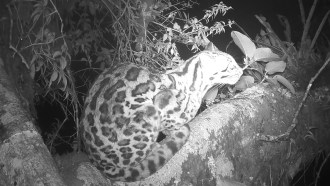
This tree is the number one choice for forest mammals going number two
The strangler fig provides food and shelter for animals in the tropics. For at least 17 mammal species, it also serves as a toilet.
- Animals
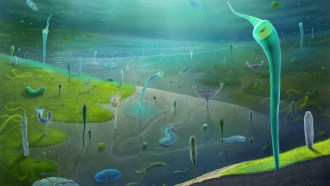
The dawn of animal evolution saw a bizarre array of sea creatures
Newfound fossils turned up a strange zoo of often-complex creatures, including some suggesting that evolution of left-right symmetry occurred earlier than once though.