Life
- Humans
Senses help the brain interpret our world — and our own bodies
Most people are familiar with sight, hearing, smell, taste and touch –– but there are others. Learn about them here.
- Animals
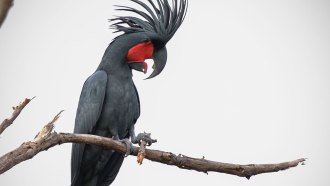
Some cockatoos craft drumsticks, then woo mates like a rockstar
To win over a gal, these flashy males craft and use their signature instruments in a musical display akin to a human rock concert.
- Brain
Let’s learn about mind reading
In the future, more advanced, less bulky mind-reading equipment could raise serious privacy concerns.
- Tech
Meet robots on a mission to help birds
A new generation of bird-like robots is helping people better understand and protect the wild animals that inspired them.
- Science & Society
These teens are using science to make the world a better place
Finalists in the 2023 Thermo Fisher Scientific Junior Innovators Challenge are doing projects that aim to help others.
- Earth
Analyze This: Tropical forests have gotten patchier
Although many of the world's forests have gotten less fragmented since 2000, tropical forests have gotten more chopped up, putting animals at risk.
- Health & Medicine
Doctors found a snake parasite in a woman’s brain — still alive
This worm typically infects pythons. Though this is its first known infection in humans, other types of worms also can infect the human brain.
- Animals
Scientists Say: Vertebrate
Animals with spines, or vertebrates, come in all shapes and sizes.
- Brain
‘Lucid’ dreamers could solve mysteries about sleeping minds
People who know they’re asleep while dreaming could help study how sleeping minds create elaborate alternate realities.
- Animals
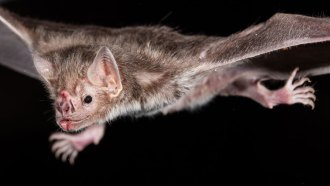
Let’s learn about vampire bats
Vampire bats rarely bite people, instead preferring to feed on animals like cows and horses.
- Animals
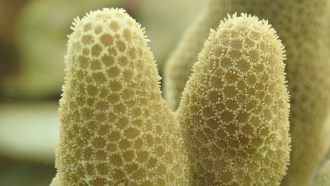
Adult corals have been frozen and revived for the first time
Living corals could be frozen for safekeeping. Scientists could later revive them to restore reef ecosystems that are withering in warming seas.
- Animals
Where does Godzilla get his atomic breath?
Some secrets of the kaiju’s atomic breath can be explained with creative applications of physics and biology.