Life
- Animals
One of the earliest meat-eating mammals was saber-toothed
Millions of years before the evolution of saber-toothed cats, a newly discovered "hypercarnivore" prowled the forests of what is now San Diego.
- Animals
Mosquitoes see red, which may be why they find us so appealing
Mosquitoes not only see colors, but also prefer certain ones, such as the hues of human skin.
- Life
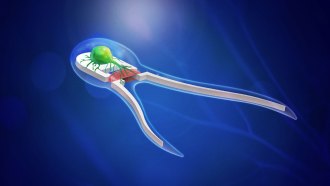
Robots made of cells blur the line between creature and machine
Scientists are using living cells and tissue as building blocks to make robots. These new machines challenge ideas about robots and life itself.
- Health & Medicine
Sickle-cell gene therapies offer hope — and challenges
Doctor Erica Esrick discusses existing treatments and an ongoing clinical trial for a gene therapy to treat sickle cell disease.
- Genetics
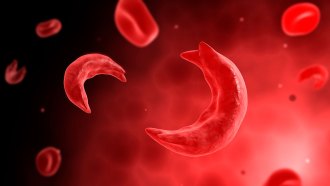
Explainer: What is sickle cell disease?
Gene mutations can alter an individual’s hemoglobin in ways that curl their blood cells. This can cause painful sickle cell disease.
- Animals
The end of the dinosaurs appears to have come in springtime
Fish fossils from North Dakota suggest when the Chicxulub asteroid devastated Earth, triggering the mass extinction of dinosaurs and other species.
- Health & Medicine
Explainer: The body’s immune system
An army of cells — and their protein arsenal — work to keep us safe. Several squads of special forces possess unique superpowers to disable or kill intruders.
- Brain
Is the sky really blue? It depends on what language you speak
English speakers talk about color a lot but rarely about smell. Researchers are learning how those who speak other languages sense the world and why differences arise.
- Brain
Teen inventors say: There’s got to be a better way
Finalists in the 2022 Regeneron Science Talent Search are revamping prostheses, earthquake safety systems and air travel.
- Animals
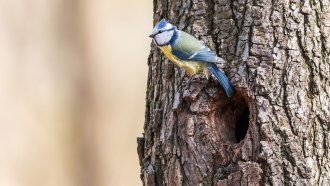
Analyze This: Birds may decorate nests to scare off rivals
Birds that nest in holes face stiff competition for nest sites. Some use feathers, also found where predators have made a kill, to keep rivals away.
- Chemistry
Scientists Say: Cellulose
Cellulose is an abundant natural polymer found in plants and algae. It’s used to make everything from paper to clothing.
- Animals
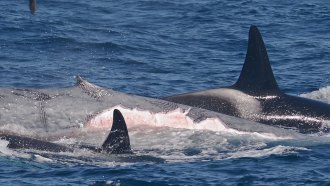
Orcas can take down the largest animal on the planet
For the first time, scientists observed that orcas can kill blue whales by using the same hunting techniques that have worked on other large whales.