Life
- Animals
Only 3 percent of Earth’s land is unchanged by people
A sweeping survey of land-based ecosystems finds that very few still support all the animals they used to. Reintroducing lost species could help.
- Fossils
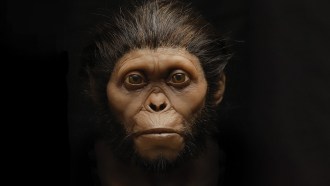
How scientists can get a better picture of our extinct relatives
Facial reconstructions of extinct species have historically been more art than science. Some researchers hope to change that.
- Brain
Let’s learn about touch
Most senses are concentrated around your head. But touch all over your body, and you need every inch.
- Agriculture
New technologies might help keep drought-prone farms green
After learning how much damage drought can do to crops, two teens designed ways to detect a thirsty plant and make sure it gets enough water.
- Plants
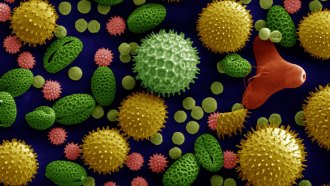
Scientists Say: Pollen
Pollen is a mass of tiny reproductive cells. These grains combine with egg cells to form seeds — but on the way, they can make some people miserable.
- Life
No animal died to make this steak
The ribeye steak is the first of its kind, and the latest in a growing list of meats printed with a 3-D bioprinter instead of being harvested from an animal.
- Archaeology
Europe’s ancient humans often hooked up with Neandertals
DNA from ancient bones shows humans and Neandertals were regularly mixing genes by about 45,000 years ago.
- Animals
Analyze This: Invasive species cost the world billions each year
A new study estimates that invasive species have cost the world more than $1 trillion since 1970. That’s almost certainly an underestimate.
- Animals
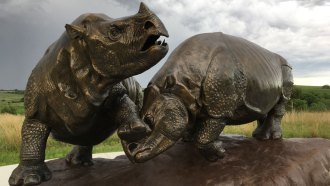
Rhinos, camels and bone-crushing dogs once roamed Nebraska
Scientists digging into the remnants of an ancient watering hole in Nebraska discovered evidence of an Africa-like savanna, complete with rhinos.
- Animals
These rabbits can’t hop. A gene defect makes them do handstands
Mutations in a gene that helps nerve cells work properly rob rabbits of their ability to hop. Instead, the animals use their front paws to move.
- Animals
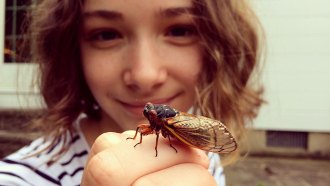
Explainer: What are cicadas?
There are more than 3,000 species of cicadas, but the best known in North America are periodical cicadas, which emerge every 13 or 17 years.
- Animals
How bees play telephone to form a swarm
Honeybees use pheromones and flapping wings to tell each other where to find the queen — so they can all be together. Learn more with this web comic.