Materials Science
- Physics
Science reveals the reasons behind painful paper cuts
Some types of paper are more likely to cause paper cuts. It’s the paper’s thickness and slicing angle that matter, physicists conclude.
- Tech
Lasers help put the cork on spilled oil
Treating cork with lasers made the material able to quickly sponge up oil while repelling water, scientists in China and Israel found.
- Materials Science
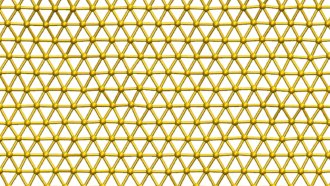
Scientists Say: Goldene
Making this metallic, two-dimensional (2-D) material is difficult — but super-thin sheets of gold could have uses in electronics and chemistry.
- Tech
Laser-based tech can identify illegal elephant ivory
Most elephant ivory is illegal to sell. Ivory from extinct mammoths isn’t. They look similar, but lasers can tell the difference to help catch poachers.
- Materials Science
Scientists Say: Superconductor
At cold enough temperatures, these materials can conduct electricity with no resistance.
- Tech
Holey basketballs! 3-D printing could be a game-changer
Wilson’s 3-D printed “airless” basketball is nearly silent and will never deflate, but will it prove a slam dunk for players and fans?
- Materials Science
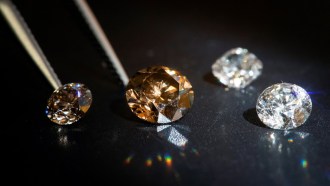
New lab trick makes diamonds without extreme pressure
The lab-grown diamonds form in a liquid of gallium, iron, nickel and silicon.
- Chemistry
Experiment: How to make the boldest, brightest tie-dye!
Clothes are made from a variety of fibers, from natural to synthetic ones. Let’s explore how different fibers react with dyes.
- Materials Science
A bit of electricity can glue hard metals to soft materials
Using this method to stick and unstick metals from soft materials could one day create new types of batteries.
- Materials Science
Scientists Say: Semiconductor
Modern electronics, from cell phones to video games, work thanks to these conductor-insulator hybrids.
- Chemistry
Turning jeans blue with sunlight might help the environment
When dipped in indican and exposed to sunlight, yarn turns a deep blue. This process is more eco-friendly than the current denim dyeing method.
- Materials Science
Scientists Say: 2-D Material
Two-dimensional materials such as graphene could improve electronics, carbon capture and more.