Oceans
- Earth
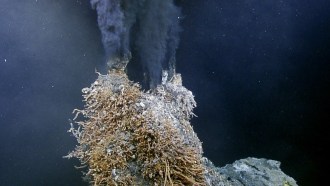
Seafloor hosts surprising number of deep-sea vents
A new sensor detects changes in seawater chemistry and finds far more ecosystem-supporting seafloor vents than scientists had believed were out there.
- Climate
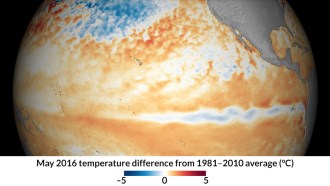
Last year’s strong El Niño is gone. Next up: La Niña
The 2015 to 2016 El Niño was one of the three strongest on record. It’s now over. Climate experts now predict a La Niña is on its way.
- Animals
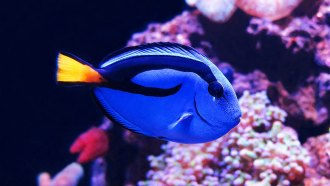
Catching ‘Dory’ fish can poison entire coral reef ecosystems
More than half of saltwater-aquarium fish sold in the United States may have been caught in the wild using cyanide, new data show.
- Animals
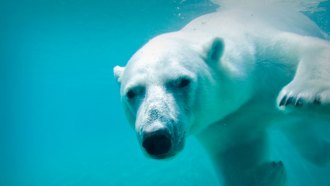
Polar bears swim for days as sea ice retreats
Melting sea ice is forcing polar bears to swim long distances — up to nine days in one case. Such long treks may be more than the bears can handle.
- Environment
Not so sweet: Fake sugar found at sea
Sucralose — sold in stores as Splenda — has begun turning up in seawater. This raises concern about the fake sweetener’s impacts on the environment.
- Archaeology
Diving deep into history
New technologies help underwater archaeologists learn more about shipwrecks and other artifacts at the bottom of rivers, lakes and oceans.
- Chemistry
Gulf oil spills could destroy shipwrecks faster
In the Gulf of Mexico, leftover crude oil from the Deepwater Horizon spill may be speeding the corrosion of old shipwrecks.
- Climate
Sea level rising fastest in 2,800 years
The oceans rose faster during the 20th century than any time in the past 2,800 years. More than half of the rise came from global warming.
- Animals
What a drag! Fishing gear’s effects on whales
Many whales become entangled in the gear that fishing boats use to catch fish and shellfish. Such debris can have dire impacts on the big mammals.
- Climate
Arctic ice travels fast, carrying pollution
Climate change is melting old sea ice in the Arctic. Now, younger, thinner ice is migrating far and fast, taking pollutants with it.
- Animals
As big animals poop out
Whales move nutrients from deep ocean to surface waters. From there, nutrients move to land and fertilize continents. But the system is in trouble.
- Animals
Scientists identify plankton from space
Plankton are often too tiny for our eyes to see. But when huge numbers bloom at once, they now can be ID’d from space, a new study shows.