Science & Society
- Climate
Carbon dioxide emissions will hit a record high globally in 2018
CO2 emissions from China, the United States and India all rose in 2018, a new report finds. This is despite urgent calls for nations to cut back on their releases of this greenhouse gas.
- Science & Society
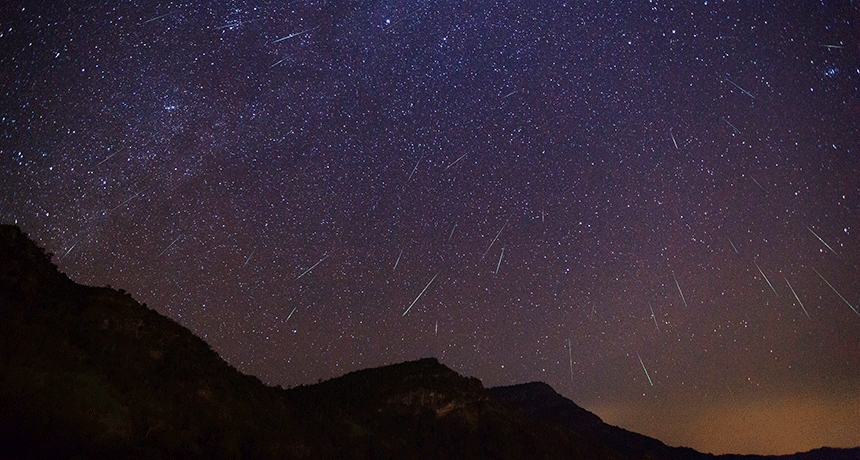
Catch a ‘shooting star’ this month — and most others
The Geminid meteor shower is underway. Here’s how you can enjoy this amazing show in the night sky.
- Science & Society
New smoke alarm tests a mother’s touch
Smoke alarms are intended to wake people at signs of a house fire. But standard alarms don’t wake kids as well as a new type that issues warnings in mom’s voice, new data show.
- Genetics
Scientist reports first gene editing of humans
A Chinese researcher claims to have edited the DNA of human embryos. Babies from those embryos were born this month, and the news kicked off a firestorm of controversy.
- Computing
This printer makes ‘visual’ aids for people with sight problems
A physicist’s vision loss was the inspiration to develop new printers. They create touch-to-read maps, charts and graphs. Some can even talk to blind users.
- Health & Medicine
Why can’t bugs be grub?
Insects are tasty and nutritious, and raising them is good for the planet. So how can Westerners be convinced to give insects a taste?
- Climate
Teens and tweens sue United States over climate change
Children brought a lawsuit over climate change. It claims the government’s actions on fossil fuels deprived young people of basic rights. Science is key to the claims.
- Health & Medicine
Many food supplements unlawfully contain drugs
The most common medicines tainting these products were usually ones that doctors prescribe for weight loss, for muscle building or to boost a man’s sex drive.
- Health & Medicine
Scientists Say: Quarantine
This is a restriction on where people or animals who are sick — or suspected of being sick — can go. Doctors use quarantine to try to prevent a disease from spreading.
- Earth
Designing tomorrow’s burger
Many people enjoy biting into a juicy hamburger. But getting it to the table can be hard on the environment. That's why scientists are at work developing new forms of beef and other meats, ones that don't require slaughtering animals.
- Health & Medicine
Teen vaping of marijuana raises concerns about addiction
A new study estimates that nearly 1 in 11 middle and high school students in the United States has vaped marijuana, raising concerns about addiction.
- Climate
Half a degree can make a world of difference
Limiting global warming to 1.5 degrees Celsius versus 2 has big benefits, says a new report from the IPCC.